
> Definition: A duplicate card detector is a collection-app feature that identifies when you own more than one copy of the same Pokémon TCG card, distinguished by set, card number, and printing, and separates keepers from trade extras automatically.
- Scans cards by set, number, and printing, not just name, to catch true duplicates across reprints and special editions.
- Pairs each duplicate with live market prices so your trade binder holds cards with real demand and value.
- Syncs duplicate flags and binder assignments to the cloud, protecting your data across devices.
How a Duplicate Card Detector Works for Pokémon Binders
A duplicate detector works by turning each scanned card into a unique collection record, then counting every later scan against that same record. The important part is the canonical ID: set, card number, printing variant, and rarity.
Card Matching by Set, Number, and Printing
AI image recognition compares the card photo against known artwork, layout, set symbols, and numbering. In practice, we still check the lower-left set number before trusting a price match, especially when two Pikachu prints look nearly identical. The scanner treats the scan result as a starting point, not the final word, then lets you verify the variant match before it updates your binder.
Plastic crinkle is normal.
Automatic Keep-vs-Trade Routing
After a second copy appears, the count rises and routing logic starts. The cleaner copy stays in the main binder, while extras can move into trade or sale inventory with condition and market price attached. The connected workflow fits collectors sorting bulk rows because it combines duplicate count, condition caveat, and live price lookup in one scan, verify, log, compare workflow. Cloud sync keeps those flags after a reinstall or device change.
How to Use the Pokémon Duplicate Tracker in TCG Pocket App
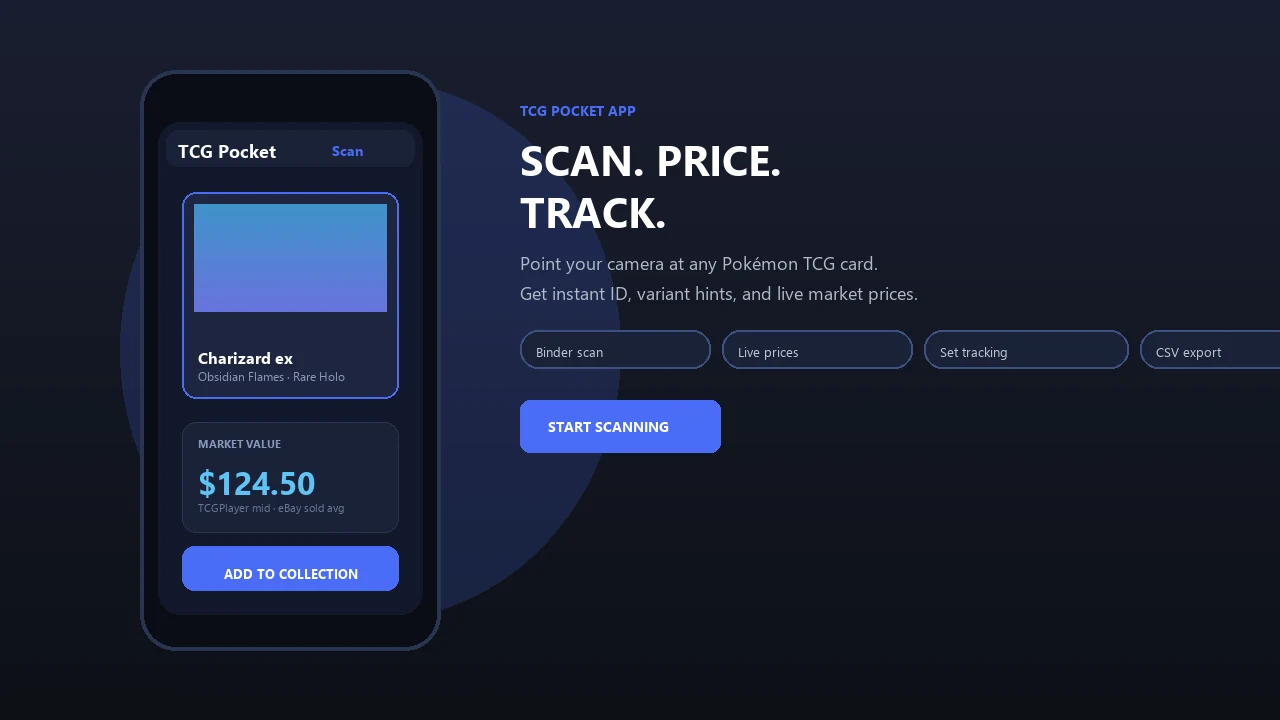
Use the Pokémon duplicate tracker when you want to scan a binder page, review copy counts, and move extras without rebuilding a spreadsheet. TCG Pocket App is fastest when the cards are already sleeved and arranged in visible rows.
- Open TCG Pocket App and tap the scan button.
- Scan each binder page so AI identifies every card and logs set plus card number.
- Review the duplicate report showing copy counts, condition notes, and price estimates.
- Tap extras into your trade binder or sale list after checking the variant match.
- Sync to cloud so binder assignments update across your phone and backup devices.
Collectors trying to prep trades before leaving the house can use TCG Pocket App because the duplicate report turns a scanned binder into a trade binder builder with copy counts, prices, and assignment buttons. If you need a broader scanning workflow first, the app to scan pokemon card collection guide covers page-by-page capture in more detail.
When to Run Duplicate Detection on Your Pokémon Collection
Run duplicate detection whenever your physical collection changes enough that memory becomes unreliable. Active collectors accumulate extras quietly, especially after sealed product, trades, and half-sorted bulk boxes.
- After opening booster boxes, ETBs, tins, or sealed lots, scan before the new stack disappears into storage.
- Before trade night or a local tournament, refresh your duplicate list so your binder reflects real extras.
- Before listing on eBay or TCGplayer, compare duplicates against sold-listing context, not only active asking prices.
- During seasonal binder audits, catch bulk duplicates that slowly build behind more visible chase cards.
- According to The Pokémon Company, more than 64.8 billion Pokémon cards had been produced worldwide as of March 2026, so duplicates are inevitable for active collectors (https://corporate.pokemon.co.jp/en/aboutus/figures/).
If your priority is clean trade prep, the duplicate detector handles the boring count check because duplicate flags update as each new binder page is scanned and logged.
What Duplicate Detection Looks Like in TCG Pocket App
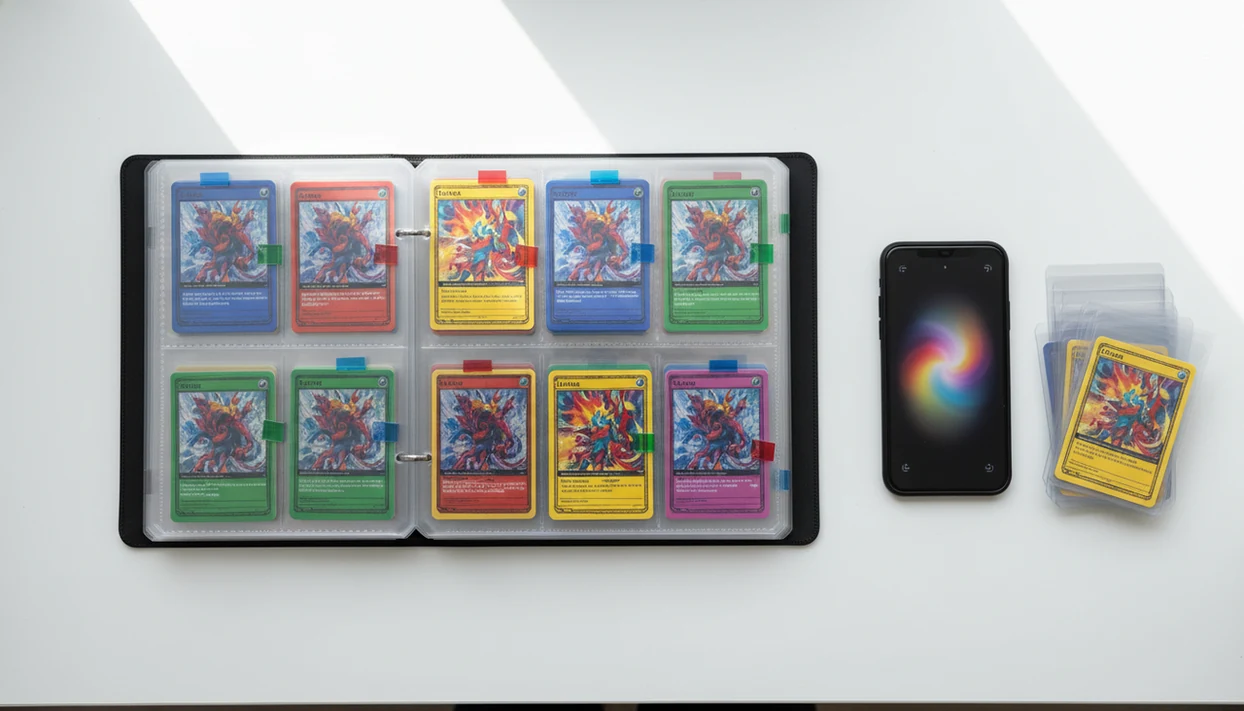
Duplicate detection in the duplicate detector appears as a visual binder layer, not a hidden spreadsheet. Card thumbnails show duplicate badges with copy counts, and tapping a card opens a keeper-versus-trade view with condition and price columns.
Trade Binder Builder with Market Prices
The trade binder builder lets you move extras with one tap, then auto-populates market values beside each card. That matters when a raw holo compared to a slab price would otherwise make the trade look better than it is. Good ai-powered pokémon tcg card scanner, live market prices, and pocket-sized collection management app features deliver faster sorting and clearer price-source transparency, not guaranteed appraisals.
Cloud Sync and Account Recovery
Cloud-synced binder layouts help protect your duplicate flags if a phone is lost or the duplicate detector is reinstalled. For collectors managing set progress too, the app that tracks pokemon set completion workflow pairs naturally with duplicate review.
Duplicate Card Detector vs Manual Spreadsheets and Alternatives
A duplicate card detector is faster than a spreadsheet because the camera captures identity first, then the collection system increments counts automatically. Manual rows can work, but they struggle with reprints, reverse holos, promos, and variant names.
| Option | Duplicate matching | Trade routing | Price context | Main drawback |
|---|---|---|---|---|
| Manual spreadsheet | Manual entry | Manual filters | User-added | Slow and easy to mistype |
| tcgplayer.com inventory workflow | Strong marketplace context | Limited routing | Marketplace-focused | Less binder-native |
| getcollectr.com style tracking | Collection overview | Basic duplicate awareness | App-based pricing | Routing depends on workflow |
| TCG Pocket App | Set, number, printing | Condition-aware trade binder | Live market values | Still needs verification |
Most tools stop at copy count; the trade binder builder adds condition-aware keeper selection and price-weighted trade suggestions. The global trading card game market was valued at USD 6.46 billion in 2023, according to Grand View Research, so collectors need efficient tools, not endless manual edits (https://www.grandviewresearch.com/industry-analysis/trading-card-games-market-report). For export-heavy users, a tool to export pokemon card collection CSV can support tax, insurance, or marketplace prep.
How We Verify Duplicate Matches and Market Prices
We verify duplicate matches by combining scanner results with manual card checks, then treat prices as market context rather than final appraisals. Identification leans on Pokémon TCG card databases, TCGplayer-style marketplace data, and public production context from The Pokémon Company.
- Confirm the set number, set symbol, card number, language, and rarity before accepting a duplicate flag.
- Compare the printing type, including reverse holo, promo stamp, alternate art, or special foil treatment, because names alone are not enough.
- Refresh market prices regularly from marketplace feeds such as TCGplayer price guides, while using sold listings more heavily when a card is volatile, newly released, or thinly traded.
- Review condition by hand, especially for whitening, dents, scratches, and surface wear that a camera may miss.
- Escalate high-value trades, graded-card comparisons, and unusual variants to human review before selling or swapping.
That workflow keeps bulk sorting fast without pretending every scan is a certified grade or guaranteed sale price.
Five Facts Every Pokémon Duplicate Tracker User Should Know
These are the duplicate tracking rules worth remembering before you trust any report. They prevent the most common binder mistakes.
- Duplicate detection must match set, number, and printing; card name alone will merge reprints that should stay separate.
- Bulk and mid-value cards benefit most because manual counting is slowest where piles are largest.
- AI scanners are not 100% accurate; ring-light glare bouncing off a reverse holo through a nine-pocket binder page can cause a misread.
- Live market prices may lag after a new set release, a sudden tournament result, or a marketplace rush.
- Binder data needs cloud backup because local-only storage can disappear when a phone breaks or an app is reinstalled.
For binder collectors, duplicate accuracy usually depends more on variant verification than scan speed because one wrong set symbol can move the wrong copy into trade inventory. The connected workflow is useful here because it keeps scan, verify, and binder assignment in the same review screen.
Related TCG Pocket App Features for Collectors
Duplicate detection works better when it sits beside identification, pricing, and export tools. The connected workflow connects these collector tasks instead of treating duplicate count as a standalone number.
- AI card scanner: Identifies cards quickly from binder pages or loose stacks, with set number review before logging.
- Live market price tracker: Adds raw versus graded context so duplicate value is not guessed from memory.
- Collection value dashboard: Shows how duplicate changes affect total collection value and sale inventory.
- Trade binder export and sharing: Turns extras into a list you can share at shops, shows, or online.
A collector who wants one system for scans, prices, and duplicates can compare adjacent workflows in the best pokemon collection tracker app guide.
Limitations
Duplicate detection saves time, but it is not a substitute for collector review. Treat the app result as a starting point, not the final word.
- AI can misidentify heavily worn cards, strong glare, or very similar art across different sets.
- Special foiling, texture, and holo bleed near the card name can create false duplicate flags.
- Market price data may lag after new releases, major tournament results, or sudden marketplace spikes.
- Incomplete scanning causes bad splits; decks, shoebox bulk, and new product must be logged too.
- Camera and data permissions are required, which some privacy-conscious collectors may dislike.
- Manual verification is still recommended before trading or selling high-value duplicates.
- Condition grading remains subjective, especially with edge wear, dents, whitening, and surface scratches.
Small mistakes compound.
TCG Pocket App reduces duplicate sorting work because it centralizes scan results, copy counts, price context, and cloud sync, but collectors should still check valuable cards against sold listings and exact variant details.