
Are Pokémon Card Scanner Prices Accurate Enough To Use?
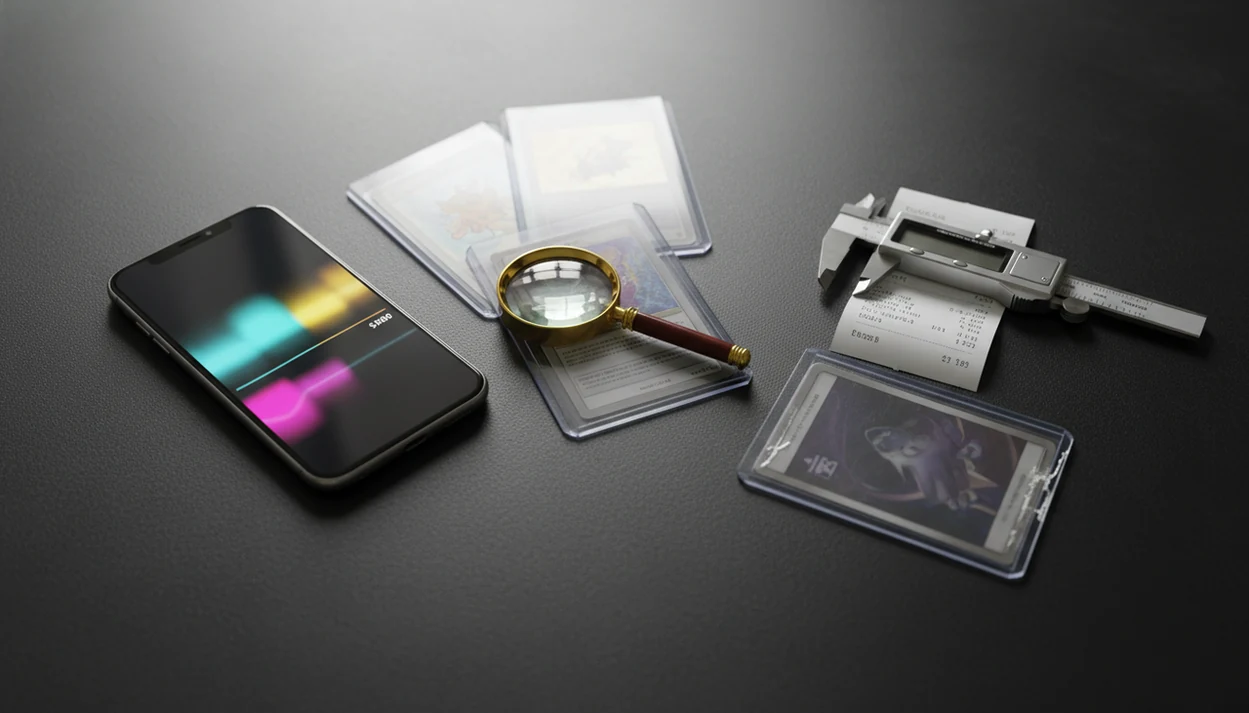
Yes, but only as an estimate: are pokemon card scanner prices accurate enough for quick collection checks, not guaranteed sale prices. Scanner values are most useful for modern raw cards with active sales data, while condition, grading, variant, language, region, and marketplace source can change the real value significantly.
> Definition: A Pokémon card scanner price is an automated estimate that pairs card identification with marketplace data; it is not an appraisal, authentication result, or guaranteed sale price.
TL;DR
- Scanner prices are best treated as live market estimates, not appraisals.
- Price accuracy depends more on marketplace data quality than on camera recognition accuracy.
- Values are least reliable for damaged cards, graded cards, rare promos, misprints, foreign-language cards, and thinly traded high-end cards.
What Pokémon scanner price accuracy actually means
are Pokémon card scanner prices accurate? They can be accurate enough for sorting, tracking, and quick checks, but not exact enough to replace sold-listing review or a professional appraisal.
There are two separate jobs inside one scan. First, the app identifies the card: name, set, number, art, and sometimes variant. Then it estimates value from marketplace data such as TCGplayer, Cardmarket, or eBay sold and listing information. A clean set number check in the lower-left corner often matters more than the camera’s first guess.
A scanned price is not an official appraisal. It is a market estimate.
Scanner apps can speed up scanning, verification, logging, comparison, and export work, but they cannot prove the exact cash value of a card. Treat the displayed number as a research shortcut, then verify important cards against recent sold listings.
Five facts about card value estimate accuracy
- Card ID can be strong while price accuracy varies. A scanner may correctly identify a Charizard print, but the displayed value still depends on the price source.
- Prices depend on coverage, freshness, region, and currency. A U.S. market average can differ from a Cardmarket trend or a local shop offer.
- Scanner prices usually assume raw, ungraded, near-mint cards. A soft corner visible through plastic can make the real sale price lower.
- Different apps can disagree without either being fraudulent. One may weight sold listings, another may show active asking prices.
- Scanner prices are strongest for collection trends and weakest for high-stakes appraisal. According to Pew Research Center, 9% of U.S. adults said they collected trading cards in a 2019–2020 survey, which helps explain the demand for fast price tracking source.
For most collectors, scanner values are better for comparing many cards than proving one card’s final sale price.
How Pokémon card scanner prices work behind the scenes
Pokémon card scanner prices work by pairing visual recognition with marketplace lookup; the camera identifies the card, while a separate pricing system estimates value from market data.
The usual flow is simple: phone camera scan, visual recognition, set and card-number matching, variant detection, marketplace lookup, then a displayed estimate. Technically, image embeddings help match the photo to known card images. In plain English, the app compares what your phone sees against a large card reference library.
Price-feed design is the harder part. Sold prices, active listings, averaging windows, outlier filtering, API latency, and currency conversion all change the number you see. U.S. Census data reported retail e-commerce at about 15.6% of total retail sales in 2023, which shows why online marketplaces now shape scanner price feeds. Ring-light glare bouncing off a reverse holo through a nine-pocket binder page can affect recognition, but it does not decide whether the market price is current.
When Pokémon card scanner prices are accurate enough
Scanner prices are generally accurate enough for modern, raw, ungraded, actively traded cards. They are especially useful when you need a fast range, not a courtroom-grade value.
Good use cases include binder sorting, trade prep, duplicate management, insurance prep notes, and total collection value tracking. Trend direction may matter more than one exact dollar amount. If twenty Sword & Shield-era hits rise together, that signal is often more useful than arguing over a $1.40 spread on one card.
Phone-first collecting is normal now. Pew reported that 93% of U.S. adults used the internet in 2023, so mobile collection tools fit how collectors already research prices at home, shops, and card shows. That makes scanner apps useful as collection-management and market-checking tools, not appraisal services.
Why scanner prices differ from real sale prices
Scanner prices differ from real sale prices because the scan rarely captures every condition caveat, transaction cost, and negotiation detail. The app sees the card; the buyer sees the copy.
Condition affects value through centering, scratches, whitening, bends, dents, print lines, and surface wear. A scan may miss a shallow dent under sleeve glare or edge whitening near a dark border. The full condition problem is covered in condition affects pokemon card price.
Raw versus graded pricing is another gap. PSA, BGS, and CGC slabs need grade-specific comparable sales, not raw market averages. Active listings can also overstate value compared with completed sold prices. A 2021 National Bureau of Economic Research working paper found that online reference prices can differ from actual transaction prices source. Fees, shipping, taxes, timing, and negotiation all move the final net value.
The green sold-price filter matters.
Scanner price accuracy by card type and market depth
Scanner price accuracy is strongest when many comparable copies sell often. It weakens when the card is rare, condition-sensitive, region-specific, or tied to grading.
| Card type | Expected reliability | Why the estimate may be strong or weak |
|---|---|---|
| Modern raw cards | Higher | Many recent sales make market averages easier to compare. |
| Vintage cards | Medium | Condition swings are large, even for the same set number. |
| Graded cards | Lower unless grade-specific | PSA, BGS, and CGC grades create separate markets. |
| Promos | Medium to low | Stamp, release channel, and region can change value. |
| Misprints | Low | Few comparable sales make averages fragile. |
| Foreign-language cards | Medium to low | Regional demand and currency conversion matter. |
| High-end chase cards | Lower | Thin sales create wider spreads and faster swings. |
A Nature Human Behaviour study on online auctions found more volatility and wider bid spreads for rare or highly valued items source. That pattern fits collectibles. For grading-specific decisions, the PSA vs BGS vs CGC for pokemon cards debate matters more than a raw scan estimate.
What sources scanner prices should be checked against
Scanner prices should be checked against sources that show real transactions, not just what sellers hope to get. Completed sales, matched condition, and recent comparables give a stronger trust signal than one bright number in an app.
A good scanner estimate usually lines up with several market views: TCGplayer for U.S. raw card movement, eBay sold listings for broad auction and buy-it-now history, Cardmarket for European demand, and local shop offers for what someone will actually pay across the counter. The key is to compare like with like. Raw near-mint, lightly played, damaged, PSA 9, and PSA 10 are different markets.
- Start with completed sold listings before looking at active asking prices.
- Compare the scanner result against TCGplayer, eBay sold listings, Cardmarket, and at least one realistic local offer when possible.
- Match condition, language, variant, and grading status before treating prices as comparable.
- Check whether the feed looks stale or distorted by currency conversion, taxes, shipping, or platform fees.
- Use several recent comparables for rare, expensive, or thinly traded cards so one odd sale does not anchor the value.
Common myths about Pokémon card scanner price accuracy
Myth 1: A scanner price is a guaranteed sale price. It is a market estimate, and buyers may pay less after seeing condition, shipping, or fees.
Myth 2: High card ID accuracy means high price accuracy. Recognition and valuation are different systems. A scan can identify the right Pikachu, then still use a weak price source.
Myth 3: The highest app estimate is the most accurate. It may simply be using active listings instead of sold-listing context.
Myth 4: A scanner can visually grade from one casual phone photo. One image cannot reliably catch dents, print lines, or surface wear. The question of can AI grade pokemon cards needs a stricter answer than “the photo looked clean.”
Myth 5: All variants should share one value. English, Japanese, reverse holo, unlimited, first edition, promo, and regional releases can have separate markets.
That Pikachu mix-up happens.
7 trust rules for card value estimate accuracy
Use a scanner price when it passes basic identity, variant, condition, and price-source checks. Manually verify any card you plan to sell, insure, grade, or trade at meaningful value.
- Confirm the card name before trusting the price.
- Check the set and card number against the lower-left or lower-right print.
- Verify rarity and variant, including holo, reverse holo, stamped promo, and first edition details.
- Match the language and region to the market being priced.
- Inspect condition manually for whitening, scratches, dents, bends, and print lines.
- Read the price method, such as sold prices, listings, market average, or app-specific logic.
- Compare meaningful cards manually against recent sold listings.
TCG Pocket App is useful for fast scanning and tracking, while serious sale decisions need context. For sale research, the market price vs sold price pokemon cards distinction is often the difference between an estimate and a realistic expectation.
When to verify a card value with a professional
Verify a card value with a professional when the number will be used for insurance, estate planning, legal paperwork, or a high-value sale. A scanner can help you start the research, but it should not be the document of record.
For graded cards, use PSA, BGS, and CGC comparables that match the exact grade, label type, and card version. For expensive raw cards, check recent sold listings across more than one marketplace so one odd auction or inflated asking price does not set your expectation. Scanner values also should not be used for authentication or counterfeit detection; a price estimate is not proof that the card is real.
- Photograph the card clearly outside the binder, including front, back, corners, edges, surface angles, and any flaws.
- Record the exact card name, set number, language, variant, grade, cert number if slabbed, and ownership notes.
- Compare recent sold listings from multiple marketplaces, especially for high-value or thinly traded cards.
- Calculate platform fees, payment fees, taxes, insured shipping, and grading or appraisal costs before setting a net price.
- Document offers, counteroffers, and negotiation context so the final value is traceable later.
Limitations
Scanner prices have hard limits, especially when the card is rare, damaged, graded, or thinly traded. Treat the app result as a starting point, not the final word.
- Marketplace feeds can be stale, incomplete, manipulated, or too thin for reliable pricing.
- Scanners may not detect subtle edge wear, surface scratches, dents, print lines, or surface clouding.
- Apps may misread reverse holo, first edition, promo stamps, regional releases, or language versions.
- Graded cards require grade-specific comparable sales and cannot be valued like raw cards.
- Rare promos, misprints, and trophy-style cards may have too few recent sales for a meaningful average.
- Regional demand, currency conversion, shipping, platform fees, and taxes can create systematic price gaps.
- Sudden hype, reprints, tournament attention, or influencer attention can move markets faster than feeds update.
- Scanner tools are not authentication tools; the separate question of can pokemon card scanner detect fakes needs its own checks.
The plastic crinkle of a binder page can hide a lot.
FAQ
Are Pokémon card scanner prices exact?
No. Pokémon card scanner prices are estimates based on available marketplace data, not exact sale values or appraisals.
Why do Pokémon card scanner apps show different prices?
Apps may use different marketplace sources, currencies, regions, averaging windows, and sold-versus-listed price logic. Two different estimates can both be reasonable.
Can a Pokémon card scanner grade card condition?
A casual phone scan usually cannot grade subtle condition issues such as dents, whitening, surface scratches, or print lines. Professional grading uses stricter inspection standards.
Are scanner prices accurate for graded Pokémon cards?
Scanner prices are often weak for graded cards unless they use grade-specific PSA, BGS, or CGC comparable sales. Raw card averages should not be applied to slabs.
Do Pokémon card scanner prices use sold listings?
Some tools use sold listings, while others use active listings, market averages, or mixed data. Users should check the price-source methodology before relying on the value.
Can scanners identify rare Pokémon card variants?
Scanners can identify many variants, but holo, reverse holo, promo stamps, language versions, and print runs still need manual verification. Similar prints can be confused.
Do scanner apps overvalue damaged Pokémon cards?
Yes, they can overvalue damaged cards if the displayed price assumes a raw near-mint copy. Damage should be adjusted manually before selling or trading.
Are Japanese Pokémon card scanner prices reliable?
Japanese card estimates depend on language-specific data, regional demand, currency conversion, and comparable sales. English-market values should not automatically be applied to Japanese copies.
Should I trust eBay prices for Pokémon card values?
eBay sold listings are more useful than active asking prices, but fees, shipping, taxes, and unpaid sales can affect real net value. Check recent completed sales, not just high listings.
Can a Pokémon card scanner replace a professional appraisal?
No. A scanner cannot replace professional appraisal, authentication, or grading for high-value cards. Use it for identification and price research, then verify manually.