
Market Price vs Sold Price for Pokémon Cards Explained
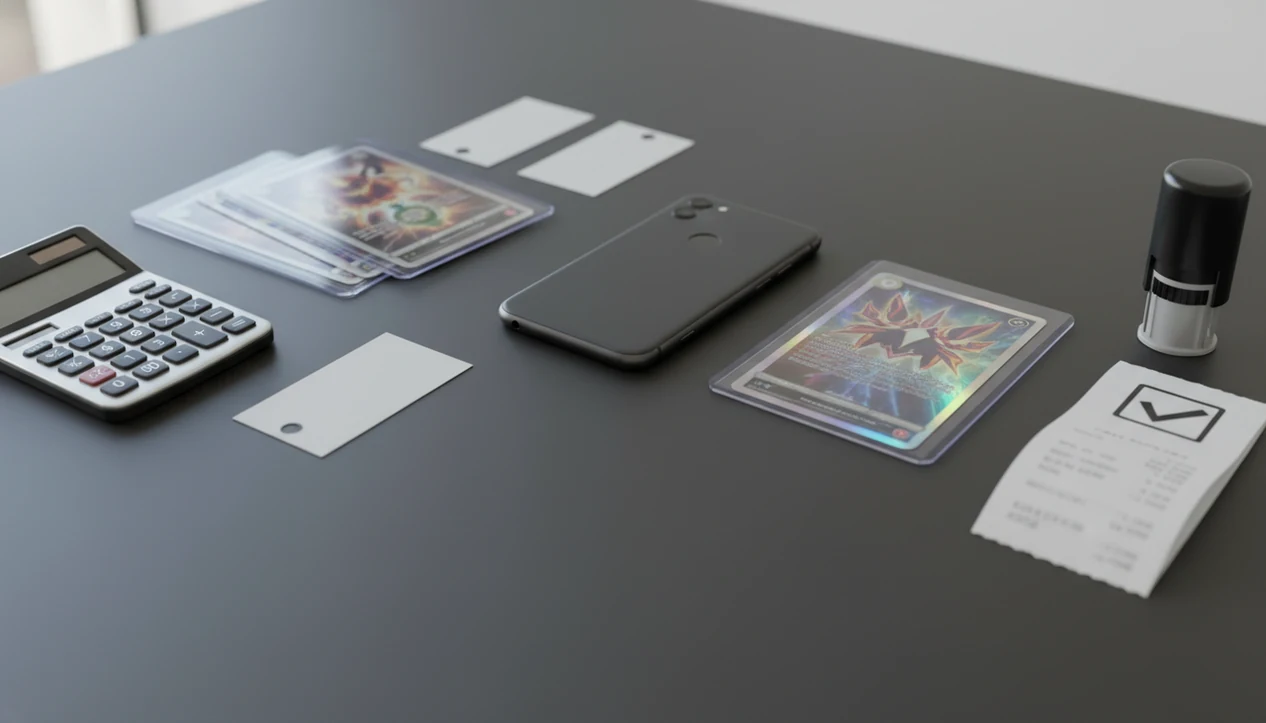
Market price vs sold price pokemon cards is the difference between a pricing estimate or active ask and the amount a buyer actually paid in a completed transaction. TCG Pocket App is useful for pulling a quick benchmark, but the safer workflow is to verify that number against recent sold comps for the same card, condition, language, edition, and grade.
> Definition: Market price is a platform benchmark for a Pokémon card, while sold price is the amount a buyer actually paid in a completed sale.
- Market price is a benchmark, not a guaranteed sale price for your exact copy.
- Sold price is stronger evidence because it shows a real transaction that cleared.
- The best Pokémon card comps match card variant, condition, grade, platform, and recency.
Market price vs sold price pokemon cards explained, side by side
Side-by-side captures of the compared products. Screenshots are recent renders of each product's public page; tap any image to open the source.
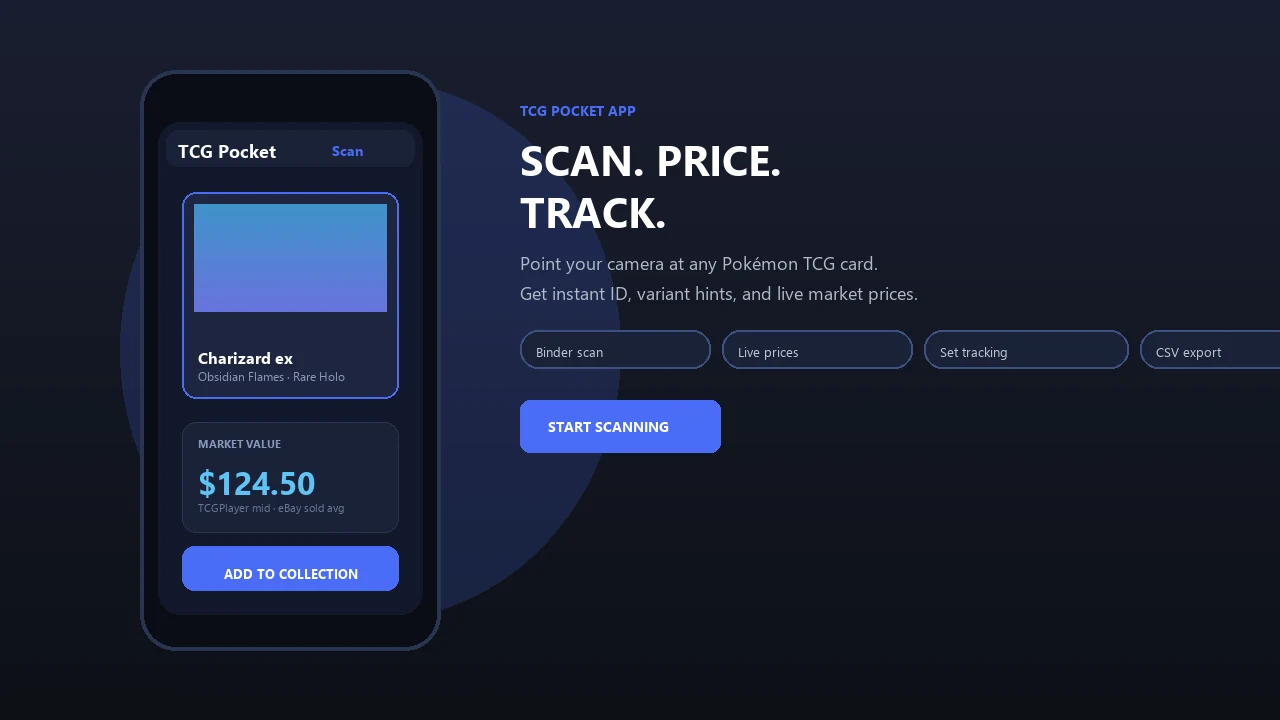
Market Price vs Sold Price Pokémon Cards at a Glance
Market price, listed price, and sold price answer different pricing questions. Market price estimates a card’s value, listed price shows what a seller wants, and sold price shows what a buyer actually paid.
| Price signal | Meaning | Best use | Weakness | Example |
|---|---|---|---|---|
| Market price | Platform benchmark based on recent sales, listings, or pricing data | Fast collection checks and rough trade values | Can lag or average mismatched copies | TCGplayer market value for a modern rare |
| Listed price | Current seller asking price | Seeing supply and seller expectations | Can sit far above real demand | An eBay listing at $120 with no buyer |
| Sold price | Completed transaction amount | Pricing a sale, purchase, or serious trade | Can include outliers or unpaid orders | Recent eBay sold listing at $84 |
A card show case full of slabs makes the gap obvious. One Charizard may have a bold asking price, while the real comp is the sale that cleared last Friday. Asking is not evidence by itself.
How Pokémon Card Market Price Works Behind the Number
Market price is a calculated pricing signal that often blends recent transaction data, platform-specific sales, and sometimes current listing behavior. It is useful, but it reflects the data source behind it.
TCGplayer, Cardmarket, eBay, pricecharting.com, and price apps can show different values because each one sees a different buyer pool. Region matters. So do currency, shipping habits, seller fees, and whether the platform skews toward raw singles, sealed products, or graded cards.
Source-note: TCGplayer describes Market Price as a recent-sales-based benchmark (https://help.tcgplayer.com/hc/en-us/articles/201357836-Understanding-Price-Data), eBay exposes completed and sold listing filters for transaction checks (https://www.ebay.com/help/selling/listings/listing-tips/sold-listings?id=4058), and Cardmarket publishes marketplace-specific price-guide data that may differ by region and currency (https://help.cardmarket.com/en/PriceGuide).
Thin markets get noisy fast. If a Japanese promo sells twice in a month, one unusually high sale can pull an average away from a realistic trade number. A good ai-powered pokémon tcg card scanner, live market prices, and pocket-sized collection management app should deliver fast identification and price context, not a final appraisal.
TCG Pocket App fits quick price checks because it starts with card identification, then gives collectors a benchmark to compare before money changes hands.
How to Use Pokémon Card Comps for Better Pricing
Use Pokémon card comps by starting with a benchmark, then narrowing the evidence until the examples match your exact copy. The goal is a realistic range, not a magic number.
- Scan or search the card with TCG Pocket App or another price tool to identify the set, print, and starting benchmark.
- Verify the variant by checking the set number, language, edition, foil type, and grade before trusting the price match.
- Review recent completed sales from the last 1 to 4 weeks when enough volume exists.
- Remove bad comps with mismatched condition, suspicious spikes, unclear best-offer results, or obviously different grades.
- Set a range for buying, selling, or trading after adjusting for fees, shipping, and local demand.
For collectors trying to price a binder before trade night, a scanner should handle the first pass by supporting a scan, verify, log, compare workflow before manual sold-comp checks. For deeper scanner reliability questions, our guide on are pokemon card scanner prices accurate explains where automated matches can drift.
Where Market Price Wins for Pokémon Card Collectors
Market price wins when speed matters more than appraisal-level precision. It is the right first reference for binder checks, collection valuation, trade conversations, and common modern cards with steady sales volume.
A nine-pocket page under kitchen light tells the story. You want to know whether the card is a $2 duplicate, a $12 trade piece, or something worth pulling aside. TCG Pocket App works well here because binder-friendly scanning can create a quick value layer without removing every sleeved card.
Market price also helps compare relative strength. If two modern illustration rares have similar conditions and one benchmark keeps rising, that trend may guide a trade discussion. Still, treat the app result as a starting point, not the final word.
When a common modern card has many recent sales, market price is often easier than manual comp research because the average has enough transactions behind it.
Where Sold Price Wins for Pokémon Card Comps
Does sold price matter more than market price for Pokémon cards? Yes, sold price matters more when the decision involves real money, scarce inventory, graded cards, vintage cards, or volatile hype.
Sold price shows buyer agreement, not seller hope. eBay sold listings, TCGplayer most recent sales, and your own local deal history all show what actually cleared. The green sold-price filter on eBay is especially useful because active asking prices can make a card look stronger than buyers have accepted.
After an auction comp is opened at checkout, a mobile price reference is most useful when it helps compare raw versus graded examples before you commit. Visible price history also tends to reduce overpaying as buyers learn the market; auction-platform research has found tighter ask-to-sale gaps when past sale prices are visible.
For expensive Pokémon cards, recent sold comps are stronger than market price because they prove a buyer paid for a closely comparable copy.
Five Facts About Listed Price vs Sold Price
Listed price vs sold price is one of the easiest places to misread Pokémon card value. Keep these five facts in mind before using any single number.
- Market price is usually a calculated reference, not a promise that your copy will sell at that amount.
- Listed price shows seller intent, while sold price shows buyer agreement.
- Asking prices can be meaningfully higher than clearing prices, especially when sellers anchor high and wait.
- Transaction-based pricing references are generally stronger than list-price-only references because they reflect cleared demand; for context, eBay’s sold-items filter documents completed-sale lookup behavior (https://www.ebay.com/help/selling/listings/listing-tips/sold-listings?id=4058), and pricing research on anchoring shows reference prices can materially bias valuations (https://www.science.org/doi/10.1126/science.185.4157.1124).
- Anchoring on inflated asks can bias buyers and sellers; experimental market research has found reference prices can push decisions far away from underlying value.
After a phone is propped against a card tin and a trade pile is separated by sticky note, the number still needs context. TCG Pocket App can log the pile quickly, but comps decide the serious number.
Market Price or Sold Price Decision Rule for Pokémon Cards
If real money is at risk, sold comps outrank market price. Use market price for quick estimates, and use sold price when accuracy affects a purchase, sale, grade submission, or high-value trade.
| Situation | Trust more | Why |
|---|---|---|
| Bulk modern cards | Market price | High volume makes rough benchmarks useful |
| Trade binder review | Market price first | Speed matters during live conversations |
| Vintage holo purchase | Sold price | Condition and scarcity change value sharply |
| PSA, BGS, or CGC card | Sold price | Grade population and label matter |
| Low-sales promo | Sold price plus caution | One sale can distort any average |
Choose market price when speed matters
Use market price for low-stakes trades, fast sorting, and high-volume modern cards. TCG Pocket App fits these checks because it pairs card identification with a quick benchmark and saved collection entry.
Choose sold price when accuracy matters
Use sold comps for selling, buying expensive cards, graded cards, vintage cards, or cards with few recent sales. Adjust for condition, grade, language, edition, platform fees, taxes, shipping, and local cash discounts; condition affects pokemon card price more than most beginners expect.
Evidence Behind Pokémon Card Price Signals
The evidence is strongest when a price signal can be traced to either a marketplace benchmark or a completed sale view. TCGplayer and Cardmarket publish platform price guides, while eBay sold listings and PriceCharting’s sales-history pages help collectors inspect cleared transactions.
Use the sources as different windows into demand, not as one universal truth. TCGplayer is strongest for its own marketplace behavior, Cardmarket reflects a European buyer and seller base, eBay shows broad auction and buy-it-now outcomes, and PriceCharting aggregates visible sales histories across many collectibles. The same card can land at different values because currency, shipping, import friction, platform fees, language preference, and local supply all change what buyers will actually pay.
- Separate observed marketplace behavior from general pricing research before making a claim.
- Treat platform documentation as evidence for how that platform displays benchmarks or sold records.
- Use anchoring and reference-price research only as directional support for why asking prices can influence people.
- Avoid calling those broader findings Pokémon-specific unless the study directly tested Pokémon card buyers.
- Compare multiple sources before pricing scarce, graded, foreign-language, or hype-driven cards.
That keeps the app number useful without pretending every benchmark is a lab-tested appraisal.
Common Myths About Pokémon Card Market Price
Pokémon card market price is useful, but several myths make collectors overprice, underprice, or trust weak comps. The problem usually starts when one number is treated as complete evidence.
- Myth: TCGplayer market price means instant sale. It does not; demand, seller reputation, shipping, and condition photos still affect whether a copy moves.
- Myth: The highest eBay listing equals value. Stale listings can sit for months because no buyer agrees.
- Myth: Sold prices are impossible to manipulate. Shill bidding, fake buyouts, unpaid orders, and coordinated spikes can distort recent history.
- Myth: Every pricing app uses the same data. TCGplayer.com, cardmarket.com, getcollectr.com, and other tools can reflect different markets.
When scan accuracy is the issue, TCG Pocket App should still be checked against the set number in the lower-left corner. A similar Pikachu print can fool a quick scan until the set symbol confirms the variant. Our scanner accuracy limitations guide covers those edge cases in more detail.
Limitations
No Pokémon card price signal is absolute. Market price, sold price, scanner estimates, and seller asks all have blind spots.
- Market prices can lag during hype spikes, sudden demand drops, or post-announcement cool-offs.
- Thinly traded cards can swing from one or two sales.
- Sold listings may include shill bids, fake buyouts, unpaid orders, or hidden best-offer discounts.
- Condition photos matter; whitening, centering, dents, print lines, and surface scratches can make two “near mint” comps very different.
- Regional platforms and currencies can create different values for the same card.
- Fees, taxes, shipping, and local cash discounts change the real net value.
- Scanner apps depend on accurate card identification and available pricing data.
- TCG Pocket App does not authenticate cards, guarantee a sale price, or replace human review of condition caveats.
A whitened edge under a desk lamp can erase the value gap between two otherwise identical comps. For authenticity concerns, read can pokemon card scanner detect fakes before relying on a scan alone.
FAQ
What does market price mean on Pokémon cards?
Market price is a platform-based estimate or benchmark for a Pokémon card. It may use recent sales, listing data, or marketplace-specific pricing behavior.
What does sold price mean for Pokémon cards?
Sold price is the completed transaction amount a buyer actually paid. It is stronger evidence than an active listing because the sale cleared.
Are listed prices accurate for Pokémon cards?
Listed prices are asking prices, not confirmed values. They can be higher than realistic sale prices, especially on stale or speculative listings.
Should I trust market price or recent sold comps?
Use market price for quick checks and low-stakes trades. Use recent sold comps for expensive cards, graded cards, vintage cards, and selling decisions.
How recent should Pokémon card comps be?
Use comps from the last 1 to 4 weeks when sales volume allows. Older comps may still matter for rare cards with very few sales.
Do PSA, BGS, or CGC grades change sold prices?
Yes, PSA, BGS, and CGC grades can change sold prices significantly. Do not mix raw cards and graded cards in the same comp set.
Can Pokémon card sold prices be fake?
Yes, sold prices can be distorted by shill bidding, fake buyouts, unpaid orders, and suspicious outliers. Filter unusual results before using them as comps.
What affects the value of a Pokémon card?
Condition, rarity, set, edition, language, demand, grade, and recent sales volume affect value. Exact variant matching is required for useful Pokémon card comps.
Get started with Market Price Vs Sold Price Pokemon Cards app on iOS.