
Can a Pokemon Card Scanner Detect Fakes or Authenticate Cards?
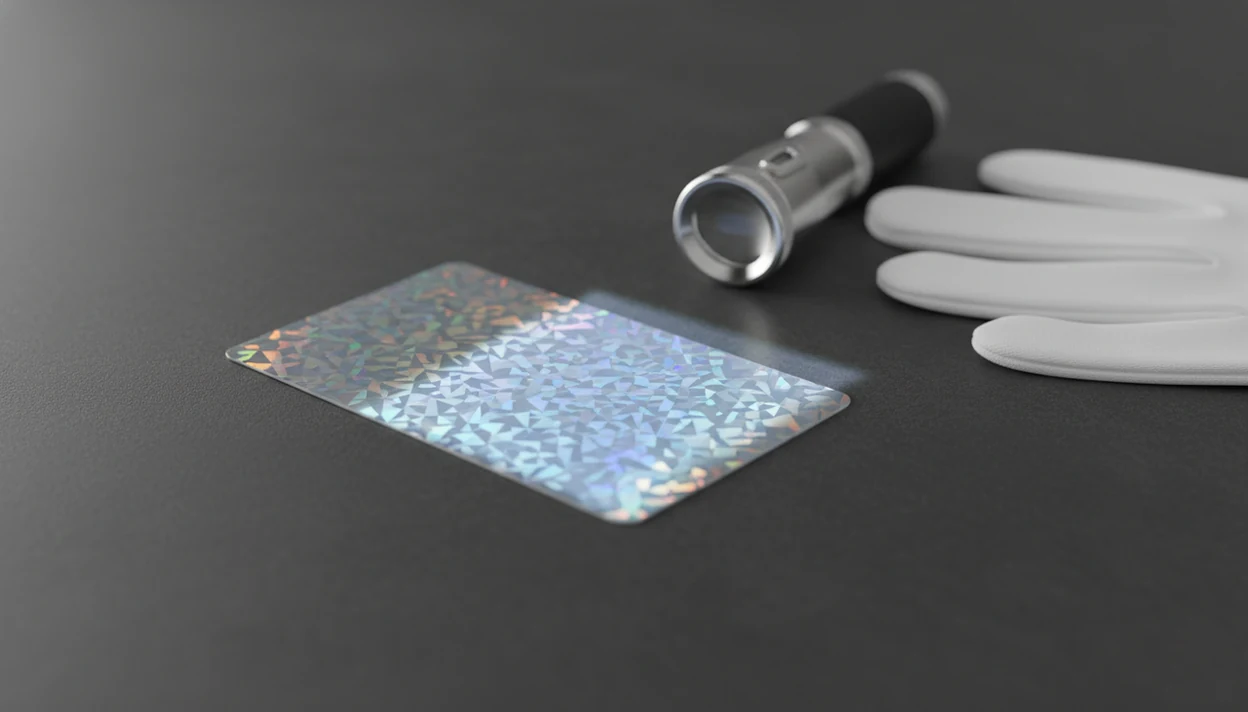
No, a phone scan cannot prove authenticity: can pokemon card scanner detect fakes is best answered as “sometimes it can flag obvious visual issues, but it cannot guarantee a card is real.” Scanner apps are useful for identifying a card, checking likely set details, and spotting mismatches, but professional authentication requires deeper inspection than a normal photo scan.
Definition: A Pokémon card scanner app identifies a card from a photo, returns likely set and variant details, and may show price or collection data; it does not authenticate the physical card.
TL;DR
- A scanner can identify a Pokémon card from a photo, but recognition is not the same as authentication.
- A pokemon card fake scanner may flag odd artwork, set, holo, or border details, but photo quality and counterfeit quality limit accuracy.
- For rare, expensive, or suspicious cards, use a scan as a first-pass check and escalate to manual inspection, a trusted shop, or professional grading.
At-a-glance answer for Pokemon card scanner fake detection
A Pokémon card scanner can help identify suspicious details, but it cannot guarantee that a card is authentic. Recognition, price lookup, and set matching are useful checks; they are not forensic authentication.
A scan helps when you need to confirm the card name, artwork, set symbol, collector number, language, or likely variant. It can also catch obvious mismatches, like a modern set number on older-looking artwork. The trouble starts when a fake copies the front image well enough to match a real database entry.
Most scanner apps are built for fast card identification, pricing, and collection tracking, not official authentication claims. Treat the app result as a starting point, not the final word.
Quick boundary:
- Scan helps: identity, set number, variant clues, market context.
- Scan is not enough: card stock, texture, edge quality, provenance, grading authenticity.
The lower-left set number still matters.
5 facts about pokemon card fake scanner accuracy
- Photo identification is not authenticity confirmation. A scanner can match a card image to a known Pokémon TCG entry without proving the physical card is genuine.
- Most scanner apps focus on identity fields. Name, set, rarity, collector number, and price are collection data, not material-authentication evidence.
- Photo conditions change the result. Ring-light glare bouncing off a reverse holo through a nine-pocket binder page can hide the pattern an app needs.
- AI scanner performance varies widely. In a 2026 Pokémon-card recognition test, one model identified 70 cards correctly, but still made set and holo/reverse-holo errors; other tested models got 20 and 26 cards correct source.
- Suspicious high-value cards deserve escalation. For rare cards, expert inspection or professional grading is safer than trusting one scan.
For valuable cards, manual verification is often better than a scan-only decision because authentication depends on physical evidence the camera may not capture.
Pokemon card scanner app mechanics behind the photo
A Pokémon card scanner app works by comparing a camera image against a database of known Pokémon TCG cards, then returning the closest identity match. The app may extract the card name, artwork, set symbol, collector number, rarity, language, and variant.
Under the hood, many tools use visual matching, image embeddings, or optical character recognition. In plain terms, the app looks for patterns it has seen before. That explains why a counterfeit front image can still match a real card entry.
Price data usually comes after identification. A live market price, sold-listing context, or raw versus graded estimate does not verify the cardboard in your hand. If you are asking can app authenticate pokemon cards, the careful answer is that most apps cannot do so conclusively from a standard photo scan.
Good ai-powered pokémon tcg card scanner, live market prices, and pocket-sized collection management app features deliver faster identification and tracking, not a certificate of authenticity.
Pokemon card scanner results versus authentication evidence
App-based visual consistency checks are useful screening signals, but authentication needs more than a single front photo. A scanner can tell you what the card resembles; an authenticator asks whether the object itself matches a genuine print.
| Check type | What a scanner can do | What authentication needs |
|---|---|---|
| Card identity | Match name and artwork | Confirm the print exists and fits the card |
| Set number | Read or infer collector number | Verify set symbol, number, era, and print run |
| Holo pattern | Suggest holo or reverse holo | Inspect pattern, layer, shine, and known variants |
| Print texture | Sometimes detect visible texture | Feel and compare texture under angled light |
| Card stock | Usually cannot test | Compare stiffness, thickness, and finish |
| Edges | May show obvious cuts | Inspect cut quality, whitening, and layering |
| Back color | May flag strong color issues | Compare saturation, ink, and alignment |
| Weight/light behavior | Cannot reliably measure | Use safe, non-destructive expert checks |
| Provenance | Cannot verify history | Review seller, receipts, grading record, or ownership trail |
A slabbed card weighed in the palm feels different from a raw binder pull, but a scanner sees pixels. For physical condition context, condition affects pokemon card price covers why value and authenticity should stay separate.
Pokemon card fake scanner warning signs
A pokemon card fake scanner may flag warning signs, not final proof. Look for mismatched card names, artwork, set symbols, collector numbers, rarity marks, language, or copyright year.
Front-image mismatches
Front-image problems include unusual borders, wrong fonts, odd energy symbols, awkward spacing, cropped artwork, and washed-out colors. A parent squinting at a rarity mark in a mixed pile is doing a real check, even before the app gets involved.
Variant and holo mismatches
Holo and reverse-holo details are a common source of scanner error. The moment a scan confuses two similar Pikachu prints, the collector still needs to verify the set symbol and variant manually.
A correct scan does not eliminate the possibility of a high-quality fake. It only means the photo looked close enough to a known card entry.
Safe steps after a pokemon card scanner fake flag
“What should I do if a Pokémon card scanner says the card might be fake?” Rescan first, then compare, inspect, and escalate if the card has meaningful value.
- Rescan the card in bright indirect light on a plain background with the full card visible.
- Remove glare and shadows by changing the angle; remove sleeves only when it is safe for the card.
- Compare the result against trusted card database details, known real copies, and the lower-left set number.
- Check physical details such as edges, back color, texture, and print alignment without ripping the card.
- Ask a specialist at a reputable local card shop, or use professional grading/authentication for valuable cards.
Don’t do destructive tests. A creased back under a fingertip tells you more safely than tearing a card apart. Broader scanner accuracy limitations are worth reviewing before using any app result in a trade.
When to seek professional Pokémon card authentication
Seek professional Pokémon card authentication before a high-value buy, sale, trade, or grading submission when doubt remains after basic checks. An app scan can support your screening notes, but it should not be treated as authentication evidence.
For a rare card, a clean scan is only one clue. The safer route is to slow the transaction down and get eyes on the physical card before money or ownership changes hands.
- Pause the deal when the card is expensive, unusually clean, poorly documented, or offered under pressure.
- Bring the card to a reputable local card shop for a non-destructive first inspection of stock, edges, texture, holo pattern, and print quality.
- Preserve the card in a sleeve or card saver, and avoid bend tests, rip tests, water tests, or any check that can damage it.
- Choose professional grading when provenance, resale value, insurance, or long-term confidence matters.
- Use scan results as screening context only, alongside photos, seller history, receipts, and expert inspection.
If the card might be rare, assume damage is more costly than patience.
5 myths about app authentication for Pokemon cards
Myth 1: A phone scan can prove a card is authentic with certainty. It cannot. A normal scan checks visual similarity, not the full material and printing evidence.
Myth 2: If the app recognizes the card name, the card must be real. A counterfeit can copy the front image closely enough to trigger the correct name.
Myth 3: AI-powered means professional-grade verification. AI can help with recognition, but authentication requires validated checks and physical inspection.
Myth 4: A wrong price means the card is fake. Price errors often come from variant confusion, raw versus graded mismatches, or thin sales data. The question are pokemon card scanner prices accurate is separate from fake detection.
Myth 5: A clean-looking card cannot be counterfeit. Some fakes look tidy in photos. Clean corners and bright color are not proof.
Scanner-app boundaries for pokemon card fake scanner use
Scanner apps can help collectors identify Pokémon TCG cards, check market prices, and manage collections quickly. TCG Pocket App can support a first-pass review by surfacing card identity, likely variant, and market context, but that review is not authentication.
That is useful at a show table when a slab case clicks on the counter and backpack straps keep brushing the display boxes. Fast lookup helps you slow the decision down.
Still, scan results are collection intelligence, not a certificate of authenticity. They should not be treated as an official Pokémon affiliation, a grading opinion, or guaranteed fake detection.
For deeper grading boundaries, the related question is whether can AI grade pokemon cards in a way that matches professional review.
Limitations
Scanner-based fake detection has real limits, even when the app is useful.
- A scanner is only as reliable as the photo quality, including lighting, focus, angle, glare, and full edge visibility.
- Sleeves, top loaders, reflections, and curved surfaces can distort the image.
- High-quality counterfeits can visually resemble real cards closely enough to pass image matching.
- Wrong set, variant, holo, and reverse-holo detection can happen even when the card name is correct.
- Price lookup and market value features are not authenticity tools.
- Vendor accuracy claims, including over 95% accuracy on clear photos, should not be treated as independent authentication studies source.
- A rare or expensive card should not be bought, sold, or graded solely because an app scan looked correct.
Experienced card shops and grading companies typically recommend non-destructive inspection before any high-value decision. For grading-company differences, the PSA vs BGS vs CGC for pokemon cards comparison explains the main routes collectors use. For official scope, Pokémon Support advises collectors to contact customer service or a reputable dealer when authenticity is uncertain, and PSA describes authentication as part of its professional grading workflow (Pokémon Support; PSA).
FAQ
Can a Pokémon card scanner prove authenticity?
No. A Pokémon card scanner should be treated as a screening tool, not proof that a card is authentic.
Can apps detect fake Pokémon cards?
Apps may flag obvious visual problems, such as wrong artwork, set details, or holo type. They cannot reliably detect every fake.
Is a correct Pokémon card scan enough to trust the card?
No. A correct match means the image resembles a known card, not that the physical card is genuine.
Can AI authenticate Pokémon cards?
AI can assist with recognition and consistency checks. Authentication requires validated methods and physical inspection.
Why did my Pokémon card scanner miss the card?
Common causes include glare, blur, sleeves, steep angles, rare variants, missing edges, or model limitations. Try rescanning with even light and the full card visible.
Do fake Pokémon cards scan correctly?
Yes, some counterfeits can scan as the real card if the front image is visually similar. That is why a scan match is not proof.
Does a Pokémon card price estimate prove the card is real?
No. Price lookup and authenticity are separate issues, and a market estimate does not prove genuineness.
Should I rip a Pokémon card to check if it is fake?
No. Avoid destructive tests and use safer visual checks, expert review, or professional authentication.
Who authenticates Pokémon cards?
Reputable grading companies, trusted local card shops, and experienced collectors can help evaluate suspicious cards. Valuable cards should be escalated beyond an app scan.
Get started with Can Pokemon Card Scanner Detect Fakes? on iOS.