
Pokemon Card Scanner Myths Collectors Should Avoid
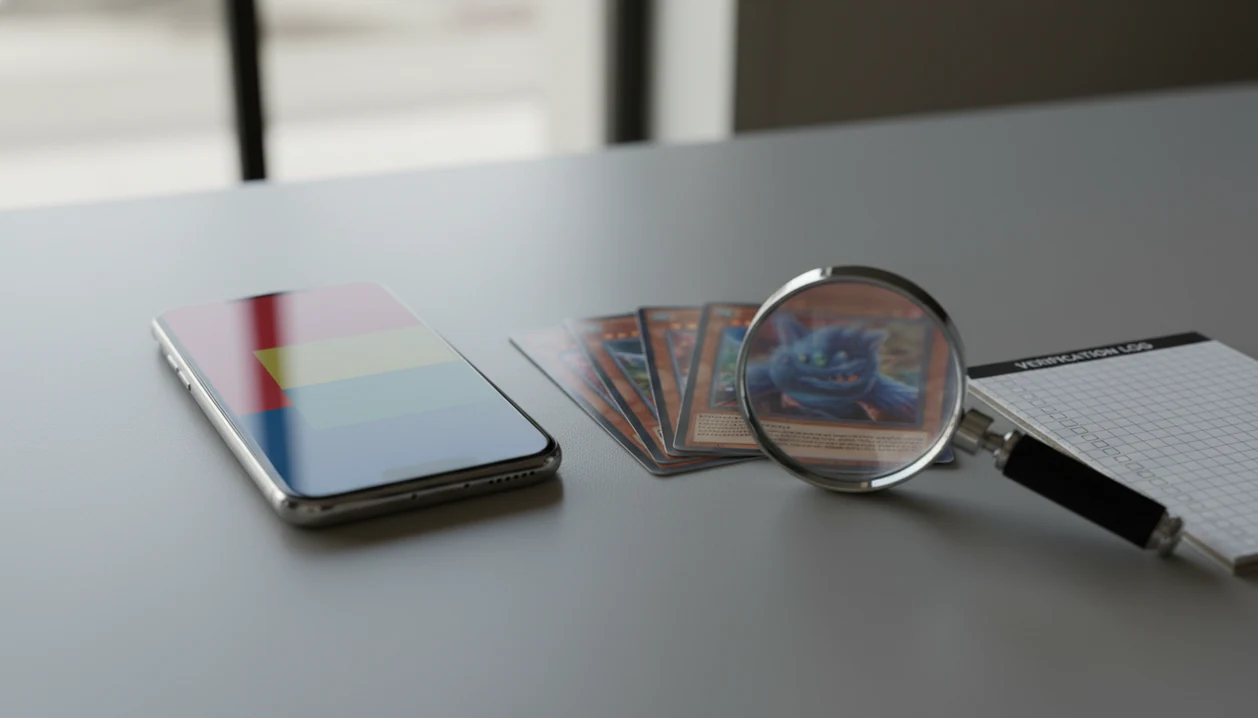
Pokemon card scanner myths can lead collectors to trust a scan more than they should: scanner apps are useful for card identification, collection logging, and market-reference pricing, but they cannot guarantee value, grade, or authenticity.
Definition: A Pokémon card scanner app identifies cards from photos, checks market-reference prices, and helps collectors track collections. It should not be treated as authentication, grading, or appraisal.
TL;DR
- A scanner app can help identify a Pokémon card, but it should not be treated as proof that the card is real.
- Scanner price results are estimates that depend on set, edition, language, condition, and recent market activity.
- The safest use of a scanner app is fast collection management plus manual verification for rare, expensive, or suspicious cards.
Pokemon Card Scanner Myths and the Reality Collectors Need
Pokemon card scanner myths usually start with one mistake: treating image recognition as proof. A scanner app compares a photo against known card records; it does not guarantee authenticity, condition, grade, or final sale value.
Reality check: a scanner result is a match suggestion, not a verdict.
The useful role is narrower and still valuable. Apps help collectors scan, verify, log, compare, and export cards faster than manual searching. They can flag likely set names, collector numbers, variants, and market-reference prices. That is especially helpful when a binder page is full and the plastic crinkles while you scan a sleeved card without removing it.
Physical-card scanning is also different from Pokémon TCG Pocket, the digital card game. One deals with real cardboard, lighting, sleeves, and condition. The other is a digital collecting game experience.
Five Pokemon Card Scanner Facts Before You Trust a Result
- Scanner apps can identify and organize Pokémon cards, but they do not replace expert authentication or professional grading.
- Card value changes with set, language, edition, condition, and timing, so a scan price is only a market-reference estimate.
- Image recognition can misread reprints, variants, glare, blur, sleeves, foils, and cropped photos.
- A scan result depends on three inputs: database quality, recognition model quality, and photo quality.
- Pokémon TCG Pocket is a digital card game, not a physical Pokémon card scanner.
A good ai-powered pokémon tcg card scanner, live market prices, and pocket-sized collection management app can speed up identification and inventory work, not certify authenticity, guarantee grade, or set a final trade price.
For most collectors, scanner apps work best as fast sorting tools because they reduce manual lookup time while still leaving important checks to the collector.
Scope: What a Pokémon Card Scanner Can and Cannot Confirm
A Pokémon card scanner can suggest what card you photographed and show useful market-reference context. It cannot authenticate the cardboard, appraise the card, or promise a grade.
Keep the jobs separate. Identification means matching the photo to a likely name, set, collector number, or artwork. Pricing reference means showing a number that still depends on timing, demand, and the exact version. Condition review means looking for wear, whitening, dents, scratches, centering issues, and other physical details. Grading claims are different again and require a much deeper review than a quick phone scan.
Before using a scan result in a serious trade or sale:
- Check the set symbol, collector number, and copyright line against the card in hand.
- Confirm the variant, including holo type, promo stamp, reverse holo, first edition marker, or reprint details.
- Verify the language because some markets price English, Japanese, and other versions differently.
- Compare recent sold prices, not only active listings or one app estimate.
- Slow down on expensive cards and get a second opinion before treating the scan as proof.
Pokemon Card Scanner App Workflow Behind the Scan
A Pokémon card scanner app works by capturing an image, extracting visual signals, matching those signals to a card database, and displaying the closest result. The app may compare artwork, borders, text, set symbols, collector numbers, card layout, and known records.
Under the hood, many tools use image recognition and database matching. In plain terms, the app is asking, “Which known card does this photo most resemble?” That is why ring-light glare bouncing off a reverse holo through a nine-pocket binder page can change the result.
Prices are usually mapped from marketplace or reference data. The camera is not inventing a value. A scanner app may identify cards, show market-reference prices, and track collections, but the price still needs sold-listing context. eBay explains that sold-item filters show completed transaction prices rather than active asking prices: https://www.ebay.com/help/buying/search-tips/finding-sold-items?id=4108. The green sold-price filter on eBay tells a different story than active asking prices.
Common Pokemon Card Scanner Misconceptions That Cause Bad Trades
Scanner app myths become costly when a collector uses one result as the whole trade argument. The safer habit is to scan first, then verify the set number, variant, condition, and recent sales before agreeing on value.
Value myths
“The app knows the exact value of my card.” It does not. A raw holo compared to a slab price can look wildly different, and the wrong condition assumption can move the number fast. For deeper pricing context, the guide on are pokemon card scanner prices accurate covers the main inputs.
Authentication myths
“The scanner can tell if a card is fake.” Recognition is not authentication. A photo may match a Charizard image while the paper, ink, texture, or weight is wrong.
Database myths
“Any card in the database will always scan correctly.” Not always. Similar promos, reprints, language variants, and poor cropping can confuse a scan.
Manual checking still matters.
Scanner App Myths About Prices, Grades, and Condition
A scanned price is an estimate, not a grade-adjusted appraisal. Near-mint and played copies of the same card can have very different values, especially when buyers care about surface scratches, edge wear, whitening, centering, bends, dents, or print defects.
The camera usually sees the front image better than subtle condition details. It may recognize the card while missing silvering along a dark card edge or a tiny ink dot near the set number. That is a condition caveat, not a small detail.
Before using a number in a high-value trade, check recent sales and the exact card variant. The full condition issue is covered in condition affects pokemon card price. For higher-value cards, one scan result should never be the final number because condition and sold-listing context can change the answer.
Pokemon Card Scanner Misconceptions About Fakes and Authentication
Card recognition and card authentication are different tasks. A scanner can match a photo to a known card while still missing counterfeit paper, holo behavior, ink quality, texture, weight, or back-color problems.
| Task | What a scanner can help with | What still needs human or expert review |
|---|---|---|
| Identification | Match art, name, set symbol, and collector number | Confirm variant, language, and print details |
| Authentication | Flag a suspicious mismatch in some cases | Inspect paper, texture, font, borders, and back color |
| Condition | Show obvious front damage in the photo | Judge scratches, dents, bends, whitening, and centering |
| Value | Provide market-reference estimates | Compare recent sales and raw versus graded results |
Use texture, font, border, and back-color checks. Compare with a known real card. Be careful with light tests, since they can be misused and may damage judgment more than help it. Valuable or frequently counterfeited cards deserve professional authentication or grading. The related question, can pokemon card scanner detect fakes, needs that same recognition-versus-authentication split.
When to Get Professional Authentication or Grading
Get professional authentication or grading when the card is expensive, altered, suspicious, or often counterfeited. A raw-card scanner estimate should not drive a trade when the result depends on authenticity, condition, or whether the card would grade well.
Services such as PSA, CGC, and Beckett can provide slabbed grading or authentication, and a reputable local card shop can often give a practical first read before you spend money on submission. This matters most for vintage holos, trophy-style cards, high-demand Charizards, unusual promos, and any card with a price that makes you nervous.
- Pause the trade when the scanner price is the main argument and the card is raw, unslabbed, or unfamiliar.
- Inspect physical red flags, including wrong texture, odd back color, strange font, incorrect weight, or a holo pattern that does not match known copies.
- Compare the card with a trusted real example, paying attention to borders, ink sharpness, set details, and surface feel.
- Ask a reputable card shop or experienced collector for a second opinion before money changes hands.
- Submit to PSA, CGC, Beckett, or another trusted grader when the card’s value justifies the fee and wait.
Pokemon TCG Pocket Scanner App Confusion Collectors Should Avoid
Do not confuse physical-card scanner apps with the official digital Pokémon card game. The official Pokémon page says players can open two booster packs every day at no cost source, and the App Store listing describes the same digital-pack experience source. That product is for collecting digital cards; it is not a tool for scanning physical cards from a binder, bulk box, or trade table. Scanner apps are separate tools for photographing real cards, matching records, and managing a collection, and they should not imply official affiliation.
Limitations
Scanner apps are useful for inventory, but their limits are real. Treat the app result as a starting point, not the final word.
- Scanner apps do not reliably authenticate rare, altered, or heavily counterfeited cards.
- Price estimates may lag behind current market movement, especially after hype, reprints, or sudden demand.
- Poor lighting, glare, sleeves, foils, and motion blur can cause misidentification.
- Reprints, set variants, promos, and language variants can be confused.
- Condition and grading details require human judgment, including centering, dents, whitening, and surface wear.
- Database gaps can produce missing, stale, or incomplete results.
- A scanner is useful for inventory, but it is not a substitute for professional grading.
At a card show table, cupping a phone screen from convention glare is normal. It still does not replace checking the lower-left set number before trusting the price match. The practical edge cases are covered further in scanner accuracy limitations.
FAQ
Can a Pokémon card scanner value my cards?
A Pokémon card scanner can provide market-reference estimates, but it cannot guarantee what a card will sell for. Value depends on condition, language, edition, variant, and recent sales.
Can a Pokémon card scanner detect fake cards?
A scanner may recognize the image on a fake card, but it cannot reliably authenticate the physical card. Counterfeit checks require paper, texture, print, border, and back-color review.
Are Pokémon card scanner prices accurate?
Scanner prices can be useful, but they depend on recent sales data, condition assumptions, language, edition, and the exact card variant. They should be checked before trades or sales.
Why did my Pokémon card scan wrong?
Common causes include glare, blur, sleeves, cropping, foil reflection, reprints, similar artwork, and database mismatches. A set number check often fixes the mistake.
Do Pokémon card scanner apps grade cards?
Scanner apps do not replace professional grading or detailed condition inspection. They may help document a card, but grading requires closer review of wear, centering, surface, and structure.
Can scanners identify Pokémon card reprints?
Scanners can help identify reprints, but set variants still need manual verification. Check the set symbol, collector number, copyright line, language, and foil type.
Is the official digital Pokémon card game a scanner app?
No. The official digital card game is for collecting digital cards, not scanning physical Pokémon cards from binders, bulk boxes, or trade tables.
Should I trust a scanner result for a trade?
Use a scanner result as a starting point. Verify value, condition, variant, and authenticity before trading, especially when the card is expensive or commonly faked.
Get started with Pokemon Card Scanner Myths app on iOS.