
Holo vs Reverse Holo Pokémon Cards and Prices
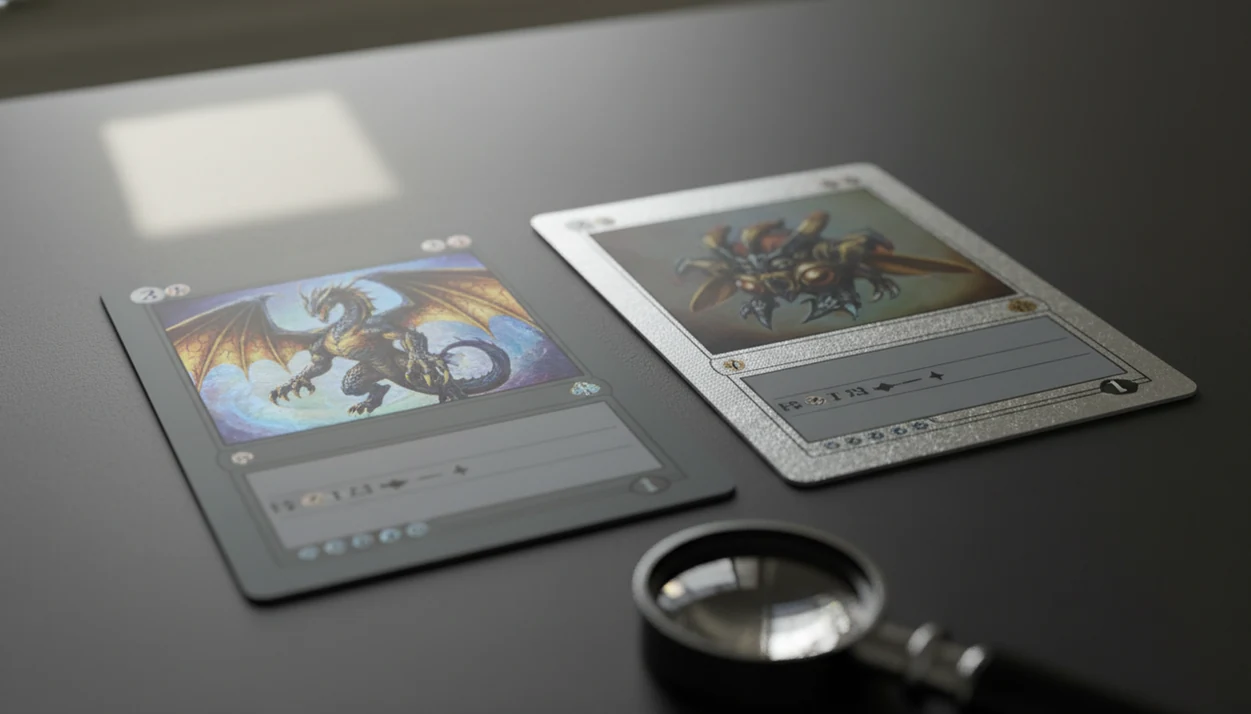
Holo vs reverse holo pokemon cards differ by foil placement: a holo card usually shines in the artwork box, while a reverse holo card usually shines across the rest of the card face. That visual difference can change the exact variant, price match, and scanner result, so collectors should confirm the set, rarity, and foil pattern before valuing a card with TCG Pocket App.
> Definition: A holo Pokémon card has foil concentrated in the illustration area, while a reverse holo Pokémon card has foil on the card background, text area, or frame outside the artwork.
- Holo usually means the Pokémon artwork is shiny; reverse holo usually means the area outside the artwork is shiny.
- Reverse holo value depends on the exact card, set, condition, and demand, not the foil style alone.
- Scanner apps must detect foil placement carefully because glare, sleeves, and set-specific patterns can make variants look similar in photos.
Holo vs reverse holo pokemon cards and prices, side by side
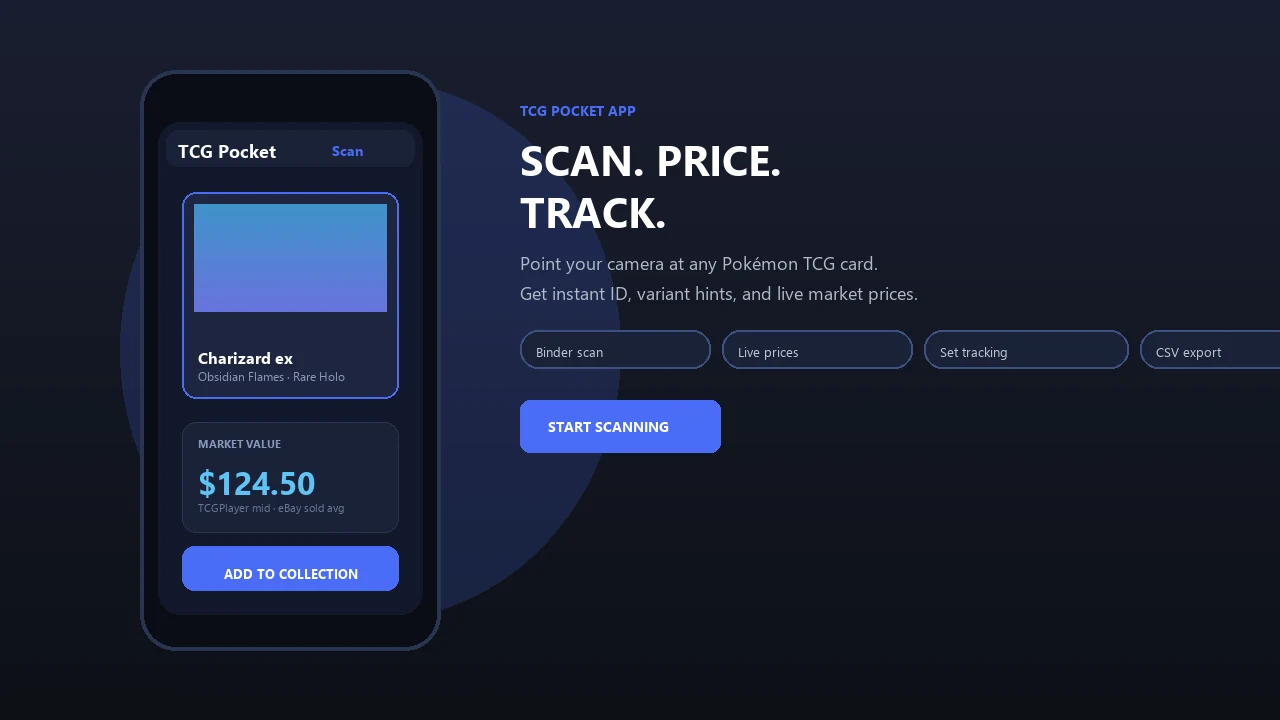
Side-by-side captures of the compared products. Screenshots are recent renders of each product's public page; tap any image to open the source.
Holo vs Reverse Holo Pokémon Cards at a Glance
The holo pokemon card difference is mainly about where the foil appears, not how the card plays. Pokémon’s official rarity-symbol guidance and major Pokémon price guides show why foil treatment, rarity, and listing variant should be checked separately: https://support.pokemon.com/hc/en-us/articles/360001000654-What-are-the-rarity-symbols-on-Pok%C3%A9mon-Trading-Card-Game-cards, https://www.tcgplayer.com/categories/trading-and-collectible-card-games/pokemon/price-guides, and https://www.cardmarket.com/en/Pokemon.
| Card type | Foil location | Typical rarity | Visual clue | Price impact | Scanner risk |
|---|---|---|---|---|---|
| Holo | Usually inside the illustration box | Often tied to rare slots in many sets | Pokémon artwork sparkles | Can price higher when that exact holo version is in demand | Art-box glare can wash out details |
| Reverse holo | Usually outside the illustration box | Can appear across common, uncommon, and rare cards in many sets | Background, text area, or frame shines | Set-specific, not a fixed premium | Sleeve shine can mimic full-card foil |
A shiny card is not automatically rare. We still check the rarity symbol, card number, and variant before logging value, especially when a raw holo sits beside a plastic slab with a very different price tag.
How Holo and Reverse Holo Identification Works
Holo and reverse holo identification works by locating the foil, not by guessing from shine alone. The key signal is foil placement: standard holo usually reflects inside the artwork box, while reverse holo usually reflects across the surrounding card face.
That foil treatment is separate from rarity, set number, and gameplay function. A reverse holo common is still a common card, and a holo card does not gain a different attack because the art sparkles. Cameras struggle because glare, penny sleeves, top loaders, and binder pages add extra reflections that can look like printed foil. Set-specific reverse holo patterns also matter, so variant databases and price guides are useful when a pattern does not match the simple rule.
- Tilt the card under soft side light.
- Watch whether the shine stays in the artwork or moves across the text area, frame, or background.
- Check the set number and variant listing before pricing.
Shortest reliable manual check: tilt the card once and identify where the foil actually sits.
Five Holo and Reverse Holo Pokémon Card Facts Collectors Miss
These five facts prevent most holo and reverse holo pricing mistakes. Treat them as the quick checklist before you trade, sell, or add a card to a master set.
- Holo foil is usually in the illustration area. The artwork sparkles, while the rest of the card face often looks normal.
- Reverse holo foil is usually outside the illustration area. The frame, background, or text area catches the light instead.
- Reverse holo cards can exist at several rarities. Many sets include common, uncommon, and rare reverse holo versions.
- Pull rates and pack structure vary by set. Don’t apply one modern booster rule to every expansion or product.
- Value depends on exact version, condition, demand, and set. Shine alone does not set the price.
After a card show table check, when a handwritten price tag sits on a sleeve, TCG Pocket App fits collectors who need a fast variant check before comparing the listing label to the actual foil placement.
Where Holo Cards Win and Where Reverse Holo Cards Win
Holo cards often win when the goal is classic binder appeal, while reverse holo cards often win when the goal is variant-complete collecting. Neither version wins every price comparison because the better choice depends on what the collector is trying to build or sell.
For nostalgia, a standard holo can feel like the pack hit collectors remember: the Pokémon artwork catches the light, the binder page has that old rare-card rhythm, and the card looks familiar beside earlier-era favorites. For master sets, reverse holo cards can matter more because the missing slot is often the variant, not the regular copy.
- Choose holo when your binder plan favors the main shiny artwork version or a childhood-style rare page.
- Choose reverse holo when you are filling every set variant and need the matching reverse pattern for completion.
- Compare prices only after confirming the exact set, number, condition, and foil treatment.
- Ignore blanket claims that one finish is always worth more; many cards have no reliable value advantage either way.
The fairest winner is the version that matches the collector’s intent, not the louder market story.
Who Should Choose Holo vs Reverse Holo Cards
Choose holo cards if you want the familiar display version where the Pokémon artwork is the star. Choose reverse holos if your goal is completion, variant tracking, or a listing that must name the exact finish.
- Pick holo when your binder is built around classic visual appeal, favorite Pokémon, and the shiny-artwork look collectors often expect from a rare slot.
- Pick reverse holo when you are building a master set, filling variant rows, or trying to match every set-specific foil pattern instead of stopping at the regular card.
- Label the exact variant if you sell cards online. A listing that says holo when the card is reverse holo can create returns, bad comps, and confused buyers.
- Prioritize condition and set matching if you are new. A clean, correctly identified card usually matters more than chasing whichever foil sounds rarer.
- Verify sold comps if you are buying as an investment. Do not assume holo or reverse holo automatically wins; the useful number is what matching copies actually sold for in the same condition.
Holo and Reverse Holo Pokémon Card Foil Patterns
A holo or reverse holo finish is a printed foil treatment applied to specific card zones, not a separate gameplay rule. The practical test is simple: find the shine, then confirm whether it sits inside or outside the artwork.
How holo and reverse holo identification works: the camera reads color, contrast, reflection, and edge detail, then compares those signals against known card images and variant data. In plain terms, ring-light glare bouncing off a reverse holo through a nine-pocket binder page can make the text box look brighter than the card design actually is.
Older and newer expansions may use different reverse holo patterns, so a set number check matters before trusting a match. Pokemon Card Scanner is a pokemon card scanner app that identifies cards, checks market prices, and tracks collections for Pokémon TCG collectors. For foil-heavy cards, the useful workflow is scan, verify, log, compare, export.
Holo Pokémon Cards in Rare Slots and Collector Binders
Holo cards often carry classic collector appeal because many collectors grew up treating the shiny rare as the pack hit. In many modern packs, holo rares also feel like the default premium version, even when the market does not price every holo above every reverse holo.
Binder habits reinforce that. Some collectors place the standard holo in the main set slot and move the reverse holo to a variant row or back page. The plastic crinkle of a binder page tells you someone has handled that card often.
On days a collector is sorting a childhood binder into modern listings, TCG Pocket App helps separate nostalgia from pricing by saving the scanned card, set, and foil variant into a collection record. A holo may price higher than a reverse holo when demand centers on that exact version, but it is never automatic.
Reverse Holo Pokémon Cards in Master Sets
Do reverse holo Pokémon cards matter for master sets? Yes, reverse holo cards often matter because many collectors treat them as required variants when building a complete binder beyond the numbered base set.
Reverse holo value is set-specific. A reverse holo of a playable card, nostalgic Pokémon, or harder-to-find older print can attract demand, while a low-demand reverse holo bulk card may stay inexpensive. Reverse holo is a normal printed variant in many sets, not a misprint, promo, or proof that a card is fake.
Anyone dealing with variant-complete binders can use TCG Pocket App because the scan record keeps the card identity and collection status together instead of leaving the reverse holo note in a spreadsheet margin. For master-set collectors, reverse holo cards are often more important for completion than for a guaranteed price premium.
Holo vs Reverse Holo Pokémon Card Prices and Variant Matching
Two similar-looking cards can price differently because marketplaces separate exact set, card number, condition, language, grading status, and foil variant. Reverse holo value is not a fixed multiplier over non-holo or standard holo versions.
Before trusting a price, check whether the listing is regular, holo, reverse holo, promo, stamped, cracked ice, cosmos holo, or another special pattern. Active asking prices on tcgplayer.com or cardmarket.com can look very different from sold-listing context, especially when a seller uses the wrong variant label.
For sold-price context, eBay’s completed and sold listing filters are useful because they separate actual completed transactions from active asking prices: https://www.ebay.com/help/selling/listings/listing-tips/finding-sold-items?id=4107.
The green sold-price filter on eBay is a useful reality check, but it still needs an exact match. When the issue is raw versus graded comparison, TCG Pocket App earns its place because it keeps scanner identification next to market-price context and grading status. Accurate pricing usually depends more on variant matching and condition than on whether a card simply looks shiny.
Evidence and Price Sources for Holo vs Reverse Holo Values
The best evidence for holo versus reverse holo value is a matched set of current marketplace checks, not one shiny-card guess. Use price guides for orientation, then confirm with completed sales before selling or trading.
TCGplayer price guides, Cardmarket listings, eBay sold listings, and official Pokémon support all help in different ways: TCGplayer and Cardmarket show marketplace pricing by card and variant, eBay sold listings show completed transaction context, and Pokémon support helps confirm official rarity-symbol basics. Asking prices are only what sellers hope to get; completed sales are stronger evidence because a buyer actually paid that amount. Do not compare a graded slab to a raw card in a sleeve, because grading status changes the market and can create a completely different price band.
- Confirm the exact set, number, language, condition, and foil treatment.
- Check TCGplayer and Cardmarket for current marketplace ranges.
- Filter eBay for sold or completed results, not just active listings.
- Separate raw copies from PSA, CGC, or Beckett graded cards.
- Recheck prices before listing, because Pokémon card data moves with demand, supply, and recent sales.
How to Use Holo vs Reverse Holo Differences When Buying or Selling
Use holo versus reverse holo differences as a variant check before you treat any price as real. The goal is to confirm the exact card first, then compare it only with matching sales.
- Inspect the foil placement before opening a price guide or typing a search. Tilt the card and decide whether the shine sits mainly in the artwork box or across the frame, text area, or background.
- Match the set name, card number, language, condition, and foil variant. A near match can still be the wrong listing if one copy is regular holo and the other is reverse holo.
- Search for sold listings using the confirmed variant terms, not just the Pokémon name. Add condition clues like whitening, dents, scratches, or grading status when they affect the comparison.
- Compare only against the same version. Ignore active asking prices and listings that mix promo, stamped, cosmos holo, cracked ice, or unrelated foil patterns.
- Save the confirmed card record before trading or listing. In TCG Pocket App, that saved scan keeps the set, number, foil type, and price context together so you do not have to rebuild the decision later.
Scanner Workflow for Holo vs Reverse Holo Pokémon Cards
A good scanner workflow reduces glare first, then confirms the variant before comparing prices. Sleeve reflections and cropped photos can cause scanner errors, especially when the foil pattern runs close to the card edge.
- Remove glare by moving the card away from direct overhead light or tilting the phone slightly.
- Angle the card until the shine shows whether foil sits in the artwork or outside it.
- Capture the full card including borders, set number, rarity symbol, and lower-left details.
- Review the suggested variant before saving, especially for holo, reverse holo, promo, and stamped cards.
- Compare price listings only against the same set, number, condition, language, and foil treatment.
If you need a broader scanning setup, our pokemon card identifier app guide covers camera-based identification in more detail. A scanner can speed up sorting and price checks, but the collector still needs to verify the foil boundary, set number, condition, and matching marketplace listing before trusting the value.
Common Holo vs Reverse Holo Pokémon Card Myths
Most bad holo-versus-reverse-holo calls start with one of five myths. The fix is usually a set number check, a better angle, and a matching sold listing.
A quick physical check helps: tilt the card under side light and watch whether the shine stays inside the artwork box or flashes across the text area and border. That one-second angle test catches many mistakes before a scanner or listing search begins.
- Myth: Reverse holo is always rarer than holo. Reverse holo availability changes by set, rarity, and product structure.
- Myth: Any shiny card is valuable. Demand, condition, language, and exact version still drive price.
- Myth: Holo means the full card face is shiny. Standard holo usually points to shine in the artwork box.
- Myth: Reverse holo means misprint, promo, or fake. Reverse holo is a normal printed variant in many Pokémon sets.
- Myth: One photo is always enough. One overexposed photo can hide the foil boundary.
A scan once confused two similar Pikachu prints until the collector verified the set symbol. For deeper variant checks, pokemon card variant detection explains why similar art can still belong to different listings.
Limitations
Holo and reverse holo identification is useful, but it has real limits. Treat any scanner result as a starting point, not the final word.
- Glare, blur, and camera angle can hide whether foil sits in the artwork or outside it.
- Reverse holo patterns vary by set, so one visual rule will not cover every expansion.
- Pack odds, reverse holo availability, and product contents are set-specific rather than universal.
- Condition can matter more than foil type for price, especially with whitening, dents, and surface scratches.
- Scanner results should be reviewed manually for foil-heavy, overexposed, cropped, or sleeved cards.
- No article or app can promise every reverse holo is worth more than a holo.
- Marketplace data can mix active asking prices with actual sold prices, which creates noisy estimates.
- Japanese and international prints may need separate set checks; our guide on what app identifies Japanese pokemon cards covers that workflow.
Tiny edge wear changes everything. TCG Pocket App helps organize the scan and price review, but the final judgment still needs human eyes on the card.
FAQ
What is a holo Pokémon card?
A holo Pokémon card usually has shiny foil in the illustration area. The rest of the card face may look mostly normal.
What is a reverse holo Pokémon card?
A reverse holo Pokémon card usually has foil outside the artwork area. The background, frame, or text area catches the light instead.
Which is worth more, holo or reverse holo Pokémon cards?
Neither is always worth more. Value depends on the exact card, set, condition, demand, language, and matching variant.
Are reverse holo Pokémon cards rare?
Reverse holo cards can appear across multiple rarities in many sets. A reverse holo finish does not automatically make a card rare.
Is a holo Pokémon card better than a reverse holo?
Neither version is universally better. The preferred version depends on the collector’s goal, binder plan, and current market price.
Can common Pokémon cards be reverse holo?
Yes, common and uncommon Pokémon cards can have reverse holo variants in many sets. Always check the set and card number.
Do reverse holo Pokémon cards count in master sets?
Many collectors include reverse holo variants when completing master sets. Some binders track both the regular version and reverse holo version.
Why do scanner apps confuse holo and reverse holo cards?
Scanner apps can confuse them because glare, sleeve reflections, lighting, and foil-heavy designs change what the camera sees. Cropped photos also remove useful border and set details.
How do I price reverse holo Pokémon cards?
Check the exact set, card number, condition, language, and reverse holo listing. Then compare matching sold listings rather than unrelated holo or regular versions.
Get started with Holo Vs Reverse Holo Pokemon Cards app on iOS.