
Pokemon Card Variant Detection For Accurate Prices
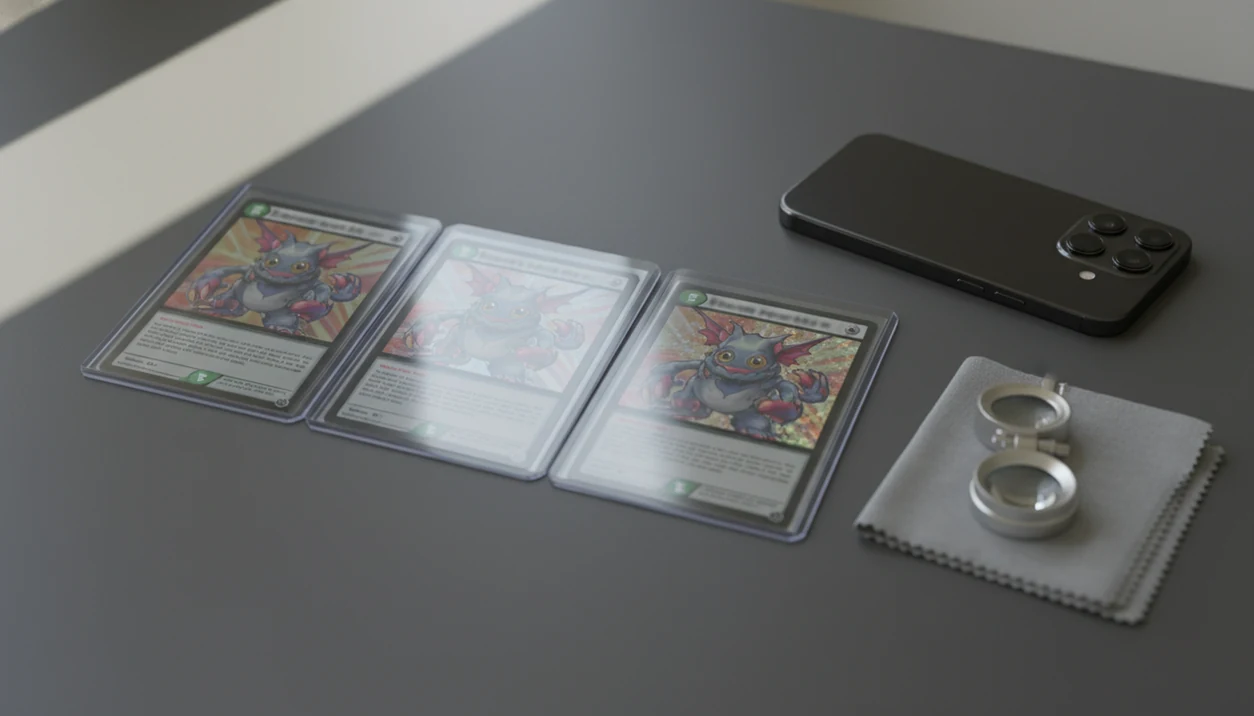
Pokemon card variant detection means confirming the exact print version of a scanned card before you trust the price or collection entry. The workflow checks the card name, set, number, rarity, holo finish, promo marks, language, edition details, and art differences so a scanner does not confuse similar versions.
Pokemon Card Scanner is a pokemon card scanner app that identifies cards, checks market prices, and tracks collections for Pokémon TCG collectors.
- A correct scan identifies both the card and the variant, not just the Pokémon name.
- Most scanner variant errors come from similar artwork, glare, sleeves, small set symbols, or subtle holo differences.
- Always verify set number, finish, rarity, promo marker, language, and art before accepting a price.
Pokemon Card Variant Detection At A Glance
Pokemon card variant detection is the collector habit of asking, “Which exact version is this?” before logging or pricing a card. The same Pokémon name can appear across sets, foils, promos, languages, editions, and art treatments, and those versions do not always share the same market value.
A binder-friendly scan should narrow the result from “Charizard” or “Pikachu” to the exact set number, finish, rarity, and print marker. That matters when a reverse holo sits beside a regular holo, or when a promo stamp changes the catalog entry entirely. We still check the lower-left number before trusting a price match, especially when the set symbol is tiny under a fingertip.
For collectors, variant checking protects two things: price accuracy and collection accuracy. A wrong variant can make a card look more valuable than it is, or hide a missing slot in a master set.
Five Pokemon Card Variants Facts Collectors Should Know
- A scanner that only recognizes the Pokémon name is not enough, because different variants can share the same name and artwork family.
- Variant markers include rarity symbols, holo treatment, set details, copyright lines, language, edition marks, and promo indicators.
- Wrong variant matches can produce wrong market prices, especially when a regular print is matched to a scarcer promo or foil version.
- Good scanner workflows let collectors review candidate matches and override the detected version before saving.
- Variant detection matters for owned status, master sets, duplicate counts, wishlists, and completion tracking.
The small checks are where errors get caught. A phone may identify the card quickly, but the collection entry is not finished until the variant slot matches the physical card in front of you. For a deeper identity-first workflow, a pokemon card identifier app should still leave room for manual review.
How Pokemon Card Variant Detection Works In A Scanner App
Pokemon card variant detection in a scanner app works by moving from image capture to card identity, then from identity to exact print version. The app uses visual recognition, OCR, database matching, and price lookup to compare the photo against known Pokémon card records.
The first pass often reads the name, artwork, borders, and visible text. The second pass checks smaller signals such as card number, set symbol, rarity, finish, promo marks, and language. In technical terms, image embeddings help compare visual similarity, while OCR tries to read printed text. Plainly: the app is matching both the picture and the tiny printed clues.
Because the Pokémon Trading Card Game began in 1996, modern scanners must handle nearly three decades of releases, reprints, promos, and regional versions (source: https://corporate.pokemon.co.jp/en/aboutus/history/). Ambiguity scoring helps flag close matches, but review is still needed. Ring-light glare bouncing off a reverse holo through a nine-pocket binder page can make two finishes look nearly identical.
How To Use Pokemon Card Variant Detection Before Pricing
Use pokemon card variant detection before pricing by scanning first, then verifying the exact print markers before saving or comparing market values. Tools like TCG Pocket App can fit this binder-friendly workflow, but the collector still needs the final check.
- Scan the card in flat light with the full border, set number, and bottom text visible.
- Confirm the card name, artwork, set, and card number before looking at any price.
- Review the finish, rarity symbol, promo stamp, language, edition mark, and art treatment.
- Compare the scanner result against alternate candidate matches if the app shows uncertainty.
- Check the price only after the variant matches the physical card.
- Save the entry to your collection once owned status, duplicate count, and set slot are correct.
For binder pages, listen for the plastic crinkle when a sleeved card shifts. That usually means the angle changed enough to rescan.
Before You Start: What You Need For Accurate Variant Scans
Accurate variant scans need clean light, visible print details, and a plan for checking the result before a price is trusted. Set up the card so the scanner can read the boring clues, not just the shiny artwork.
- Choose soft, indirect light and avoid a hard reflection running across foil or reverse holo areas. A bright stripe can hide the finish pattern the app is trying to compare.
- Frame the whole card, including the full border, set number, copyright line, and bottom text. Cropping those details removes the clues that separate close variants.
- Remove a glare-heavy sleeve only when the card is low-risk to handle and your hands, surface, and timing are safe. If not, angle the sleeve and rescan instead.
- Prepare recent sold-listing or catalog references before checking value, especially for promos, alternate arts, and older prints.
- Set aside valuable, confusing, or borderline matches for slower manual verification. Those are the cards where one wrong finish or stamp can change the collection entry.
Step 1: Scan The Pokemon Card With Variant-Friendly Photo Quality
Variant-friendly photo quality starts with flat lighting, a steady phone, and the whole card in frame. A scanner cannot reliably read a finish, set number, or promo mark if the photo is blurry, tilted, cropped, or washed out by glare.
Use indirect light rather than a bright reflection across the foil. If the card is in a reflective sleeve, angle the sleeve slightly or remove the card only if you can do it safely. Keep the bottom text visible, including the card number and copyright line. Those small details often separate two versions that look alike at a glance.
Reverse holo cards are especially easy to misread. The shine sits in the background rather than only on the artwork box, so a bad photo can flatten the pattern. Bad light turns useful foil texture into noise. Simple fix: rescan before you price.
Step 2: Match Pokemon Card Identity Before Variant Details
Does a scanner need to identify the card before it identifies the variant? Yes. The correct order is card name, set, card number, and artwork first, then finish, rarity, promo marks, language, and other variant details.
Identical card names can appear in multiple sets, products, and reprints. Even familiar artwork can return later with a different stamp, number, or distribution method. That is why name recognition alone should never trigger a price decision. If the app says “Pikachu,” the job is only half done.
Modern scanners also face nearly three decades of Pokémon card prints. The more history a card line has, the more lookalike records the app must compare. We have seen a scan confuse two similar Pikachu prints until the collector checked the set symbol by hand. The lower-left number settled it. For that step, the full how to identify pokemon card set number guide is useful.
Step 3: Compare Pokemon Card Variants By Finish, Rarity, And Promo Marks
Variant comparison works best as a checklist, not a guess based on shine. Check finish, rarity, promo indicators, language, edition details, copyright line, numbering, and art type before accepting the detected result.
| Variant marker | What to check | Common mistake |
|---|---|---|
| Regular holo | Foil mainly in the artwork area | Logged as reverse holo |
| Reverse holo | Foil pattern across the card background | Missed under sleeve glare |
| Promo print | Promo stamp, promo numbering, release marker | Priced as set pack version |
| Rarity | Symbol or special rarity label | Ignored after name match |
| Language | English, Japanese, or other print language | Mixed into one price bucket |
| Art type | Full art, alternate art, similar illustration | Treated as the same artwork |
Finish markers
Regular holo and reverse holo differences are easy in hand, but harder on a phone screen. The holo vs reverse holo comparison explains that finish placement is the key clue.
Print markers
Promo stamps, prerelease stamps, copyright lines, and numbering differences deserve a second look. A special-looking card is not automatically a special-price card.
Step 4: Fix Pokemon Scanner Variant Errors Before Saving
What are pokemon scanner variant errors? They are wrong or incomplete matches where the app identifies the general card but assigns the wrong print, finish, promo version, language, or set slot.
Automated recognition can confuse similar art, identical names, and subtle foil treatments. It can also struggle when a price sticker is curling on top of a top loader, or when convention hall glare forces you to cup the phone screen just to read the result. Not ideal.
Review alternate candidate matches before saving. If the set, finish, promo marker, or language disagrees with the physical card, manually override the detected variant. A good scanner should speed up the scan, verify, log, and compare routine, not replace collector judgment.
Fixing the variant prevents duplicate entries, inflated owned counts, and wrong prices from spreading through the collection.
Pokemon Card Variants That Most Often Cause Wrong Prices
These Pokémon card variants most often cause wrong prices because they look similar but belong to different catalog or market records. Treat the app result as a starting point, not the final word.
- Regular holo versus reverse holo: The same card can have different finish slots, and glare can hide the difference.
- Standard print versus promo print: Promo stamps, promo numbering, and product-specific releases can change the comparison group.
- Normal art versus full art or alternate art: Similar names can mask major layout and rarity differences.
- English versus other language versions: Language affects demand, availability, and the marketplace used for comparison.
- First edition, unlimited, shadowless, and era-specific prints: Older cards need extra print-detail review, especially when condition and edition both affect price.
A special-looking card is not automatically valuable. Sold-listing context matters more than shine, and the green sold-price filter on eBay tells a different story than active asking prices.
Common Myths About Pokemon Card Variant Detection
Common myths about pokemon card variant detection usually come from trusting the first scan result too quickly. The safer habit is to separate recognition from verification.
| Myth | Reality |
|---|---|
| Card name recognition is enough. | Pricing often depends on the exact variant, not just the name. |
| Every holo card is valuable. | Value depends on print, rarity, demand, condition, and sold-listing context. |
| AI detects every variant from any photo. | Glare, sleeves, cropping, and low resolution can still cause misreads. |
| A recognized card means the collection entry is complete. | Owned status needs the correct set slot, finish, language, and variant. |
| One price source settles the value. | Raw versus graded, active listings, and recent sales can tell different stories. |
For pricing checks, the safer question is not “what is this card?” but “what exact version sold recently?” For a longer price-source discussion, read are pokemon card scanner prices accurate.
Sources For Pokemon Card Variant And Price Checks
The best sources for Pokemon card variant and price checks are a mix of release history, sold-sale data, and market comparison tools. Use them to confirm the exact print first, then compare prices inside the right condition and grading bucket.
The long release history matters because Pokémon cards have decades of sets, promos, reprints, and regional products to separate; official Pokémon history gives useful context for that complexity source. For price context, eBay sold listings are often more useful than active listings because they show completed sales, not what a seller hopes to get. TCGplayer and PriceCharting can also help as comparison points, especially when checking whether one sale looks unusually high or low.
- Confirm the variant details before opening price tabs: set, number, finish, language, promo mark, and art type.
- Compare raw cards only against raw cards, not slabs.
- Separate graded prices by company and grade, because PSA 10, CGC 9.5, and raw near mint are different markets.
- Adjust for condition by checking whitening, dents, scratches, centering, and surface wear.
- Ignore active asking prices as proof of value unless a completed sale supports them.
Pokemon Card Variant Verification For Master Set Tracking
Pokemon card variant verification keeps master set tracking honest because variants often count as separate collection slots. One wrong finish or promo match can make a set look complete when a slot is still missing, or make duplicates appear where you own only one version.
Master set collectors usually track regular cards, reverse holos, promos, secret rares, special illustrations, and language choices according to their own rules. That means owned status, duplicate tracking, wishlists, and binder organization all depend on the same variant match. Duplicates stack beside a laptop quickly when the app records two physical cards under the wrong entry.
A collection tracker can support scan, verify, log, compare, and export routines, but it should not imply affiliation with official Pokémon digital collecting products. The broader Pokémon collecting ecosystem is large, including official mobile products on iOS and web, but collection taxonomies still need careful review.
Limitations
Pokemon card variant detection is useful, but it is not authentication, grading, or a guaranteed price appraisal. The scanner result should be verified when the card is valuable, ambiguous, or important to a master set.
- Blurry, cropped, tilted, sleeved, or glared images can hide finish and print details.
- Automated scanners can confuse similar art, identical names, or subtle holo differences.
- Live market prices can be wrong when the app matches the wrong variant.
- Promos, special rarities, prerelease stamps, and tiny set symbols may require manual review.
- Collection tracking can be inaccurate if source data or variant taxonomy is incomplete.
- Condition grading is separate from variant detection; whitening, dents, surface scratches, and centering still need human review.
- Raw versus graded prices should not be mixed without checking PSA, BGS, CGC, or sold-listing context.
Condition caveat first. A correct variant in damaged condition can still price below a cleaner copy.
FAQ
What is a Pokemon card variant?
A Pokemon card variant is a different print or version of the same core card. Variants can differ by finish, set, rarity, promo marker, language, edition, numbering, or artwork.
Why do Pokemon card variants change prices?
Prices change because buyers value the exact print, rarity, finish, demand, and condition differently. A reverse holo, promo, or alternate art can sell in a different market range than a standard version.
Is a reverse holo Pokemon card a separate variant?
Yes, a reverse holo is usually tracked separately from a regular non-holo or standard holo version. It should be verified before saving the card to a collection.
Can a scanner miss holo Pokemon card variants?
Yes, scanners can miss holo variants when lighting, glare, sleeves, or subtle foil patterns hide the finish. Rescanning at an angle often helps.
How do Pokemon promo cards differ from regular prints?
Promo cards may have promo stamps, special numbering, different distribution methods, or separate catalog entries. They should not be priced as regular set prints without verification.
Do language variants matter for Pokemon card prices?
Yes, language can affect demand, availability, marketplace comparisons, and collection categorization. English and Japanese versions are often tracked separately.
Are Pokemon scanner variant errors common?
Pokemon scanner variant errors are most likely with similar artwork, identical names, poor photos, glare, or tiny set symbols. Manual review reduces wrong saves and wrong prices.
Can Pokemon card variant detection find fake cards?
Variant detection is not the same as authentication. Inconsistent symbols, fonts, colors, or numbering can raise concerns, but fake-card review needs separate checks.
Should I manually verify Pokemon card scans before saving them?
Yes, manually verify scans for valuable cards, ambiguous matches, promos, and master set tracking. Scanner tools are most useful when the collector confirms the final variant before saving or pricing.
Get started with Pokemon Card Variant Detection Guide app on iOS.