
TCGplayer vs eBay Sold Prices for Pokémon Card Values
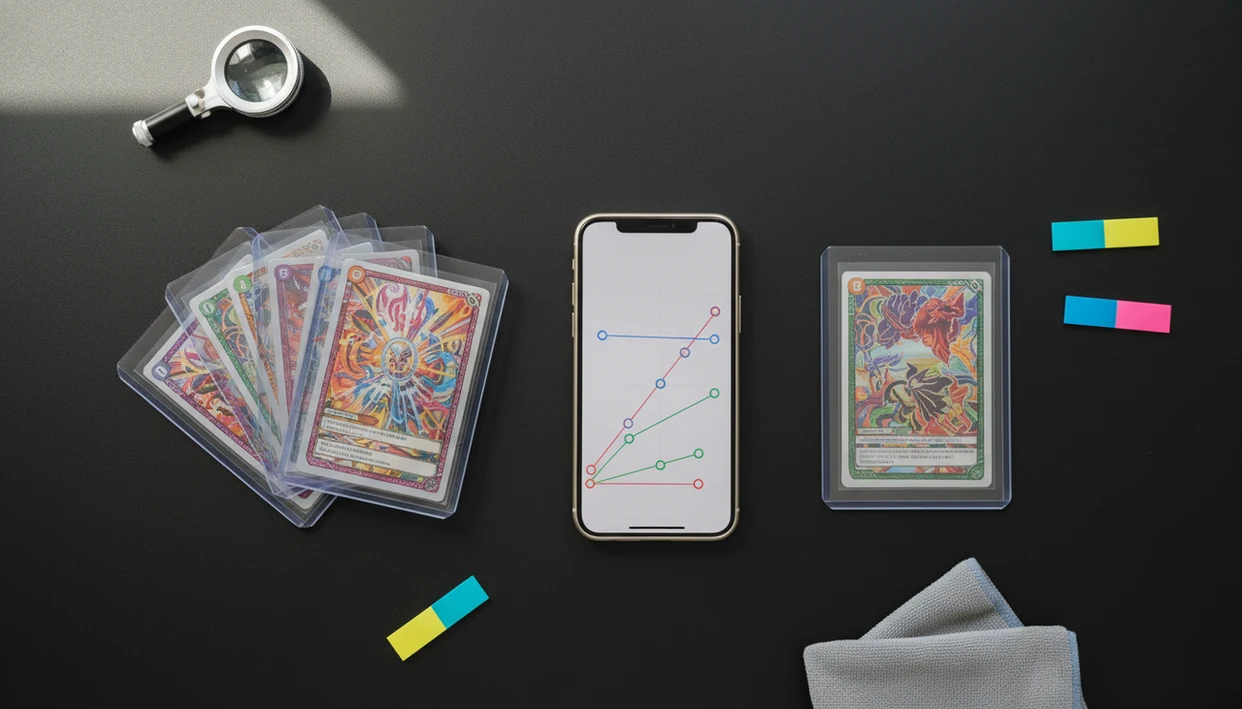
Use TCGplayer for fast modern raw-card pricing and eBay sold listings for graded, vintage, rare, or high-value Pokémon cards. A reliable TCGplayer vs eBay sold prices Pokémon workflow starts with the most liquid marketplace signal, then adjust for condition, shipping, fees, and recent demand. TCG Pocket App fits this workflow because it helps identify the card and variant before you decide which price source deserves more weight.
Definition: TCGplayer market price is a marketplace-specific pricing signal based on recent completed TCGplayer sales, while eBay sold prices are completed public sales from a broader marketplace that often better reflects graded, vintage, rare, and high-end Pokémon cards.
- TCGplayer market price is usually strongest for modern, frequently traded raw Pokémon singles.
- eBay sold Pokémon card prices are usually stronger for graded slabs, vintage cards, promos, rare variants, and high-end cards.
- For the most realistic value, compare several recent comps, remove outliers, and adjust for condition, fees, and shipping.
Tcgplayer vs ebay sold prices pokemon card guide, side by side
Side-by-side captures of the compared products. Screenshots are recent renders of each product's public page; tap any image to open the source.
TCGplayer vs eBay Sold Prices Pokémon At-a-Glance Table
TCGplayer wins some Pokémon pricing questions, and eBay sold listings win others. The right source depends on card type, sales volume, and how much condition detail matters.
| Decision point | TCGplayer market price | eBay sold listings |
|---|---|---|
| Best use case | Modern raw singles with steady volume | Graded, vintage, rare, niche, or expensive cards |
| Weak spot | Thin data for obscure or graded cards | Outliers, weak photos, odd auction timing |
| Speed | Fast for checking many raw cards | Slower, because comp review matters |
| Card type | Playables, set cards, bulk rares, common chase cards | PSA, BGS, CGC slabs, promos, sealed oddities |
| Condition detail | Broad condition buckets | Photos, description, seller notes, grade |
| Seller context | TCG-focused buyer pool | Broader marketplace behavior and seller reputation |
According to Pew Research, 93% of U.S. adults who sell items online use eBay, Facebook Marketplace, or similar marketplaces, which explains why eBay-style comps often capture casual seller behavior source.
No single winner. Match the source to the card.
Five Facts About TCGplayer Market Price vs eBay Sold Listings
These five facts explain why tcgplayer market price vs sold results can disagree, even for the same Pokémon card.
- TCGplayer market price is based on recent completed TCGplayer sales rather than the current lowest listing; TCGplayer describes Market Price as an average of recent sales source.
- eBay sold listings are realized sales from auctions and Buy It Now transactions; use eBay's sold-items filter rather than active asking prices source.
- TCGplayer can be noisy for rare, thinly traded, or graded Pokémon cards.
- eBay sold comps can be skewed by outliers, poor listings, auctions ending at odd times, or hype spikes.
- The best valuation blends platform data with condition, variant, shipping, seller fees, and recency.
At a card show table, a seller may point to one green eBay sold price while a buyer has TCGplayer open beside a stack of raw singles. Both can be partly right. The set number check still comes first.
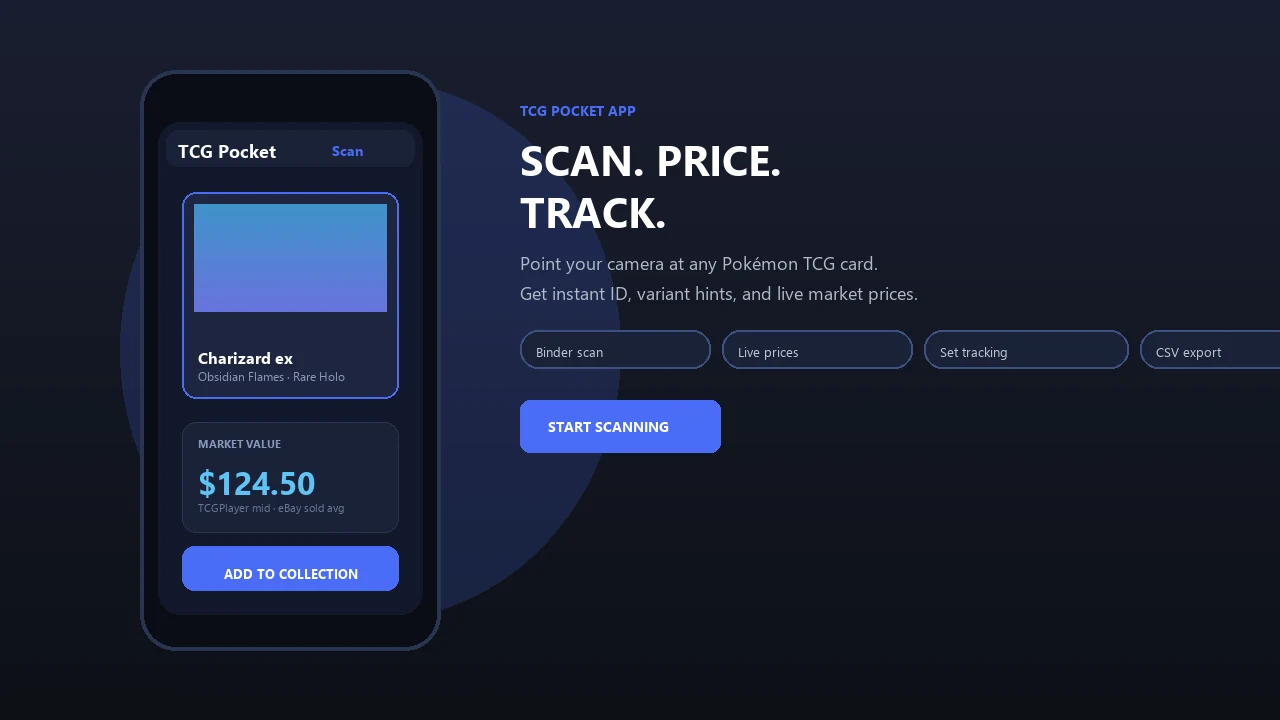
If your priority is fast triage on a mixed pile, TCG Pocket App fits because it scans, identifies the variant, and gives you a starting value before deeper sold-listing research.
How TCGplayer Market Price and eBay Sold Pokémon Card Prices Work
TCGplayer market price is a marketplace-specific calculation based on recent completed sales on a trading-card-focused platform. eBay sold prices are completed public sales from a broader marketplace, shaped by auctions, Buy It Now listings, photos, seller reputation, and search ranking.
The technical difference is buyer-pool segmentation. In plain English, different groups of buyers see different listings, trust different sellers, and tolerate different prices. A modern raw Charizard ex may move quickly on TCGplayer because many buyers compare near-identical copies. A PSA 9 vintage holo may sell higher on eBay because the slab photo, cert number, and seller history carry more weight.
According to the U.S. Census Bureau, U.S. retail e-commerce sales reached about $1.12 trillion in 2023, which frames the scale of online buying behavior without proving anything card-specific source. A scanner workflow can speed up identification and recordkeeping, but it cannot verify centering, surface dents, altered photos, or whether an eBay comp matches the same variant.
Where TCGplayer Wins for Modern Pokémon Singles
TCGplayer is usually the first source for modern, liquid raw Pokémon singles because it was built around card buyers comparing many similar copies quickly. It works well for recent set cards, playable cards, bulk rares, common chase cards, and frequently traded raw singles.
Price competition can make TCGplayer lower than eBay for the same raw card. On TCGplayer, buyers often sort through condition and price like a parts bin. On eBay, listing photos, promoted placement, and seller reputation can push a sale higher.
Still, condition buckets are not close inspection. Near Mint can hide whitening, dents, centering issues, surface wear, or a note buried in the listing. We have seen a reverse holo look clean until ring-light glare bounced across the binder page and exposed a surface line.
Anyone dealing with modern set sorting can use TCG Pocket App because binder-friendly scan results help log duplicates and compare raw prices before listing or trading. For broader app comparisons, our Pokémon card price app guide covers price-source workflows in more depth.
Where eBay Sold Pokémon Card Prices Win for Graded and Vintage Cards
Should I use eBay sold Pokémon card prices for graded or vintage cards? Usually yes, because exact grade, photos, cert number, language, and seller history matter more than a raw-card marketplace average.
eBay sold listings are strongest for PSA, CGC, and BGS slabs; vintage cards; obscure promos; low-population cards; sealed oddities; high-end cards; and unusual variants. Use sold and completed filters, then match the grade, language, set, and variant. The green sold-price filter matters because active asking prices are not completed sales.
Do not use one comp. Build a small cluster of recent matching sales and remove damaged, mislabeled, or suspiciously high outliers. If a scan confuses two similar Pikachu prints, verify the set symbol before trusting any price source.
When graded-card uncertainty is the issue, TCG Pocket App helps because it separates the identification step from the valuation step, then lets you compare raw versus graded context. The raw vs graded pokemon card value guide explains that gap further.
TCGplayer vs eBay Fees, Shipping, and Net Sale Price Differences
The highest visible sold price is not always the strongest seller outcome. Net sale price depends on platform fees, payment processing, shipping, packaging, returns, and the time needed to create the listing.
| Cost factor | TCGplayer impact | eBay impact |
|---|---|---|
| Platform fees | Verify current seller terms before listing | Verify current category and seller terms |
| Shipping | Efficient for many low-cost singles | More variable for slabs and insured packages |
| Packaging | Sleeves, top loaders, envelopes, mailers | Mailers, boxes, insurance, signature options |
| Buyer expectations | Card condition accuracy matters | Photos, tracking, and seller communication matter |
| Seller time | Faster for many raw singles | Slower but stronger for unique items |
| Expensive cards | Fee thresholds can change the result | Fee caps or category rules can change the result |
eBay may produce a higher gross price for graded or high-end Pokémon cards. TCGplayer may be faster for many raw singles. For sellers, net value usually depends more on fees, shipping risk, and listing time than on the visible sold price alone.
How to Use TCGplayer and eBay Sold Prices for Pokémon Valuation
A reliable Pokémon valuation workflow starts with exact identification, then chooses the price source that fits the card. TCG Pocket App can scan the card, identify the variant, and help track the final collection value after you choose a valuation basis.
- Identify the exact card by set name, set number, language, rarity, foil type, stamp, and variant.
- Choose the primary source by using TCGplayer first for modern liquid raw singles and eBay sold first for graded, vintage, rare, or expensive cards.
- Check recent comps from the correct source, including several matching sales rather than one attractive number.
- Remove outliers caused by damaged cards, mislabeled listings, hype spikes, or auctions ending at odd times.
- Adjust the value for condition, shipping, seller fees, taxes, and whether the card is raw or graded.
- Record the basis in your collection tracker so future updates compare the same type of price.
After scanning through a sleeved binder page, the plastic crinkle is a useful reminder: the camera can identify the card, but it cannot feel dents. For phone-based workflows, the how to check pokemon card value with phone walkthrough shows the same scan, verify, log, compare process.
TCGplayer or eBay Sold Prices Decision Rule by Card Type
Choose TCGplayer first for modern liquid raw singles; choose eBay sold first for graded, vintage, rare, niche, or expensive cards. Cross-check both when the value is meaningful, sales volume is low, or prices are moving fast.
- Modern raw singles: Start with TCGplayer, especially for recent releases, playable cards, and high-volume set cards.
- Graded and vintage cards: Start with eBay sold listings, then match grade, cert context, language, and photo quality.
- Edge-case raw cards: Near mint vintage raw cards, Japanese cards, promos, error cards, and low-volume variants need both sources.
- New set hype cards: Check recency carefully because last week’s sales may not reflect today’s demand.
- Collection records: Store whether the value came from TCGplayer, eBay sold, or a blended estimate.
For collectors who need consistent collection updates, TCG Pocket App earns the spot because saved cards can keep the chosen valuation basis tied to the item record. If collection structure is the bigger problem, compare options in the Pokémon collection tracker app guide.
Evidence and Source Notes for TCGplayer vs eBay Pokémon Prices
This comparison uses platform documentation as the starting point, then treats real card context as the deciding layer. TCGplayer’s own Market Price explanation matters because it describes a signal built from recent completed sales on that marketplace, while eBay help materials explain how sold and completed filters separate real transaction history from active asking prices.
For seller net value, check the current TCGplayer fee page and eBay selling-fee page before doing the math. Fee schedules, category rules, payment processing, shipping labels, and insured packages can change the outcome even when two visible sale prices look close. Broad e-commerce statistics are useful background for online buying behavior, but they do not prove that either marketplace is more accurate for a specific Pikachu promo, PSA slab, or near mint raw holo.
- Start with the official pricing or sold-listing help page for the platform you are using.
- Confirm the card-specific match: set, number, language, condition, grade, and variant.
- Review current fee pages before comparing seller proceeds.
- Recheck pricing-source links quarterly; this page was last reviewed in January 2026.
Common Myths About TCGplayer Market Price vs eBay Sold Pokémon Comps
TCGplayer market price and eBay sold prices should not always match. They come from different buyer pools, different listing formats, and different seller incentives.
Myth one: TCGplayer market price is just the current lowest listing. It is based on recent completed TCGplayer sales, so the lowest active ask is a different signal. Myth two: one eBay sold listing proves true value. One strange auction can mislead a whole trade conversation.
Myth three: graded Pokémon cards can be priced accurately from raw TCGplayer market price. A PSA 10, CGC 9.5, and raw near mint copy are different markets. Myth four: a higher gross sale always means a better outcome for the seller. Fees, returns, packing time, and shipping risk still count.
After a price chart is checked before an offer, slow down and inspect the card. A soft corner visible through plastic can erase the tidy number on screen.
Limitations
Marketplace prices are useful, but they are not appraisals. Treat every app result and platform price as a starting point, not the final word.
- Neither TCGplayer nor eBay perfectly captures condition differences, especially for older raw Pokémon cards.
- Centering, surface flaws, whitening, bends, dents, language, stamps, and variants can change value significantly.
- TCGplayer data can be thin for obscure promos, rare variants, graded cards, and older low-volume Pokémon cards.
- eBay sold comps can be distorted by outlier auctions, shill bidding, poor photos, mislabeled listings, and hype spikes.
- Historical data access can be limited, so very old comps may not reflect today’s market.
- Shipping, taxes, returns, seller fees, and platform policies can change net value.
- No scanner or pricing tool should replace close inspection for expensive Pokémon cards.
For high-value cards, TCG Pocket App can help organize the research trail because scans, variants, and collection values stay attached to the card record. However, loupe inspection, cert lookup, and current marketplace terms still matter.
FAQ
Is TCGplayer market price accurate for Pokémon cards?
TCGplayer market price is useful for modern raw Pokémon cards with frequent sales volume. It is weaker for rare, graded, vintage, or thinly traded cards.
Are eBay sold prices reliable for Pokémon card values?
eBay sold prices are reliable when you review several recent matching sales and remove outliers. They are less reliable when you rely on one odd sale.
Should I use TCGplayer or eBay sold prices for graded Pokémon cards?
Use eBay sold listings first for graded Pokémon cards. Exact grade, cert context, photos, and matching recent sales matter more than raw market price.
Should I use TCGplayer or eBay sold prices for modern raw singles?
Use TCGplayer first for modern raw singles with steady sales volume. It is usually faster for common set cards, playables, and liquid chase cards.
Why are eBay sold prices higher than TCGplayer market price?
eBay sold prices can be higher because photos, seller reputation, search visibility, broader buyers, shipping, and listing quality affect the final sale. TCGplayer is often more price-competitive for raw singles.
Should I value a Pokémon card from one sold listing?
No, one sold listing is not enough to establish value. Check a cluster of recent matching sales and remove damaged, mislabeled, or unusual outliers.
How much does condition change a Pokémon card's value?
Condition can strongly change a Pokémon card's value, especially for vintage and high-value raw cards. Whitening, dents, surface wear, centering, and bends can all reduce the price.
Can scanner apps price Pokémon cards accurately?
Scanner apps can identify cards and pull market data, but users still need to verify condition, variant, and recent comps. TCG Pocket App is useful for scan-and-track workflow, not as a substitute for inspection.