
Pokemon Card Scanner App Success Stories From Real Collectors
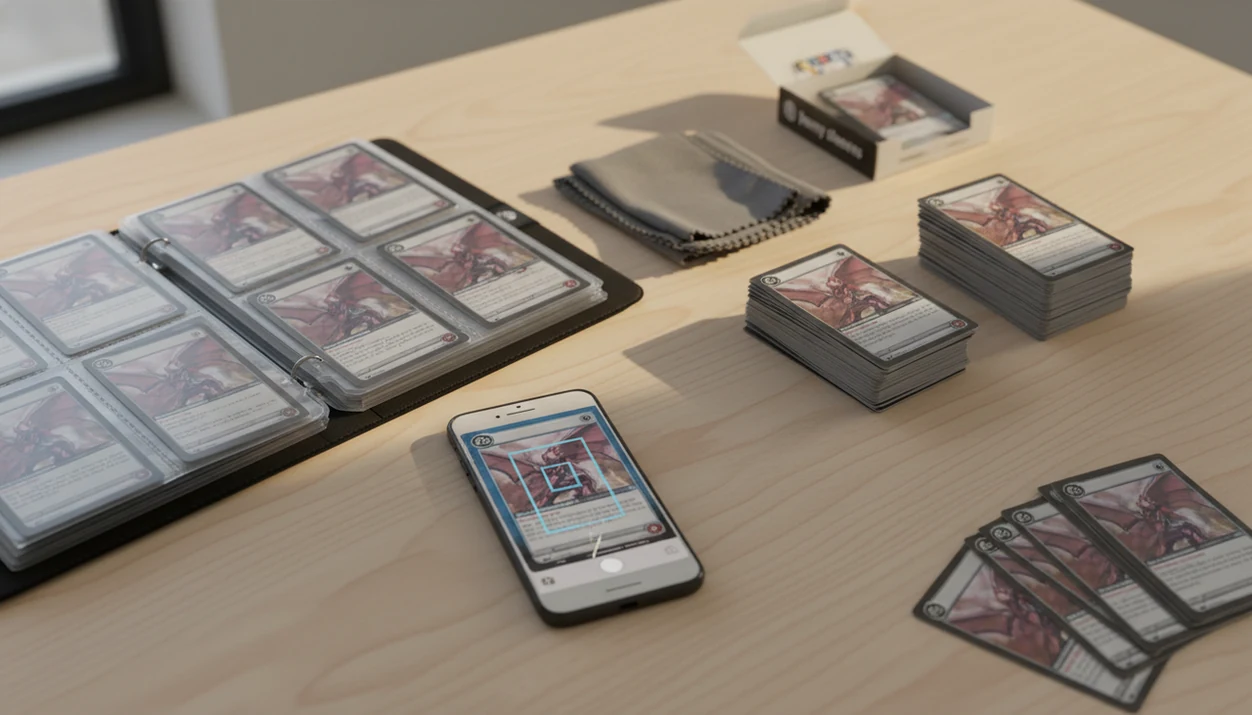
Pokemon card scanner app success stories are most useful when they show practical wins: faster binder sorting, cleaner duplicate checks, and more consistent value lookups. The realistic result is better collection management, not guaranteed resale profit.
For context, this scanner workflow identifies cards, checks market prices, and tracks collections for Pokémon TCG collectors.
- The strongest collector app stories focus on speed, organization, and fewer cataloging errors.
- Pokemon scanner results still need manual review for condition, reprints, glare, and similar-looking cards.
- Live market prices help collectors make decisions, but they are estimates rather than guaranteed sale prices.
Pokemon scanner results collectors should expect
A good pokemon scanner result is a cleaner workflow, not a promise that a card is valuable. Success usually means the collector identifies cards faster, spots duplicates sooner, and keeps a binder record that is easier to trust.
The useful wins are plain. A scanner can turn a mixed stack into named cards, set numbers, variants, and rough market references. It can also show that two cards with the same character are not the same print. That matters when a Pikachu scan looks right until the set symbol says otherwise.
The pocket check is real.
App values should be treated as informational estimates. For collectors comparing tools, a best pokemon card scanner app guide should focus on scan review, price-source transparency, and export options rather than dramatic sale claims. For most collectors, scanner success means fewer manual searches and a collection list that finally matches the binder.
Collector app story method and evidence boundaries
Collector app stories are most reliable when they are treated as workflow examples, not universal proof. The stories below are composite, workflow-based vignettes drawn from common collector scenarios: mixed binders, bulk boxes, trade piles, and price checks before a local meetup.
We look at practical outcomes. Cards sorted. Duplicates found. Manual corrections made. Binder records cleaned. Those are outcomes a collector can repeat with patience and a decent photo setup.
No miracle math here.
These examples do not claim profit, grading accuracy, or guaranteed resale value. A scan can help identify a card, but it cannot replace a careful condition check under angled light. It also cannot tell whether a buyer will pay the displayed number next weekend. Success is measured by better records and fewer missed details, not by a promised return.
How to use pokemon card scanner app success stories
Use pokemon card scanner app success stories as a checklist for your own workflow, not as proof that the same result will happen in your collection. The best stories show what was scanned, how it was scanned, and where the collector still had to slow down.
- Start with stories that explain the card mix and setup, such as sleeved binder pages, loose bulk stacks, reverse holos, older sets, or a phone camera under desk light.
- Separate workflow wins from resale claims. Faster sorting, cleaner duplicate lists, and easier trade prep are more believable than a vague promise of profit.
- Compare the example to your real use case. A binder cleanup story may not tell you much about a bulk box, and a trade-night story may not match a graded-card review.
- Look for manual correction notes before trusting accuracy language. Set numbers, foil type, language, and condition still need human eyes.
- Name the alternatives when a story compares tools. Dragon Shield, Collectr, PriceCharting, and eBay sold listings do different jobs, so category-wide claims should be treated carefully.
How a pokemon card scanner app works behind the scenes
A pokemon card scanner app works by capturing a card image, comparing visual features against a card database, matching the likely set and version, then attaching price and collection fields. In technical terms, the app uses image recognition and database matching; in plain language, it tries to match what the camera sees to a known card record.
Some scanner databases are large. One Android scanner listing says it supports 30,000+ cards in its database, according to its Google Play source. Size helps, but it does not remove the need for review.
Lighting still changes results. Ring-light glare bouncing off a reverse holo through a nine-pocket binder page can hide the texture or set mark. Cropping can miss the card border. Similar artwork can trigger a close but wrong variant match. AI-assisted scanners and collection managers can speed up this work, but the collector still needs to scan, verify, log, compare, and sometimes correct.
Pokemon scanner workflow for binder cleanup
A binder cleanup works best when scanning is followed by a manual review pass. The goal is to create a usable inventory, not to trust every first match without checking the lower-left set number.
- Scan each page or card in small groups so glare, sleeves, and page curl are easier to control.
- Review the suggested match, especially the set name, set number, language, and foil type.
- Tag duplicates as trade, bulk, keep, or upgrade so repeated cards do not stay scattered across pages.
- Check prices as estimates, then compare raw versus graded only when the card condition justifies the extra research.
- Update binder sections after scanning, keeping evolution lines, sets, or favorites in a structure you can maintain.
- Verify the final inventory before exporting or relying on the totals.
For binder-heavy collectors, the best pokemon card scanner for binders is usually the one that tolerates sleeves, page glare, and quick set number checks.
Story 1: Maya’s duplicate binder pokemon scanner results
What happened when Maya scanned a binder with mixed pages and uncertain duplicates? She found that several “duplicates” were actually different set prints, while a few cards she had kept apart were the same card with different wear.
Her binder had old favorites beside newer pulls, with no clear order. The plastic crinkle of a binder page made each sleeved card shift a little as she scanned, so she worked row by row and checked the match after every pocket. One Charmander result looked correct at first, but the set number check changed the entry.
That small correction mattered. It kept a tradeable extra out of her main set page and moved a cleaner copy into a sleeve. By the end, Maya had fewer repeated cards across the binder, a small trade pile, and a record she could search without flipping every page.
Story 2: Jordan’s bulk box collector app story
Jordan’s collector app story started with a shoebox of cards on the carpet, not a rare-card headline. The goal was simple: scan batches, confirm uncertain matches, and build a digital inventory before deciding what belonged in bulk, binder, or trade storage.
He scanned in stacks of about 25, then paused to review anything with similar art or an unclear set symbol. The app helped him move faster than typing every name, but it did not turn common cards into high-value finds. Most stayed bulk. That is normal.
Instant scanning and price tracking are common scanner-app features; Dragon Shield’s app listing says it can scan Pokémon cards instantly and includes price tracking, translations, deck building, and collection tracking, per its App Store source. For Jordan, the win was a finished inventory and fewer mystery piles. A free pokemon card scanner app can be useful for this kind of first pass if review tools are clear.
Story 3: Lena’s trade-night pokemon card scanner app success story
Lena used scanning before a local trade night to build a want list, a trade pile, and a price reference she could open quickly at the shop. That made the conversation calmer because she was not guessing from memory while someone waited across the table.
She scanned her extras the night before, then marked cards she would trade only for specific wants. At the shop, she checked active value ranges, but she also looked at condition and demand. A corner ding, a less popular language, or platform fees can change the real outcome.
A good ai-powered pokémon tcg card scanner, live market prices, and pocket-sized collection management app deliver faster card lookup and better records, not guaranteed trade advantage or exact resale value. Lena’s success was a broader collector system: a clean list, fewer forgotten duplicates, and a trade plan that left room for human judgment.
Common patterns in pokemon card scanner app success stories
Realistic scanner success stories tend to repeat the same practical wins. They are about collection management, not speculation.
- Faster identification helps collectors move through mixed cards without typing every name into a marketplace search.
- Fewer manual entries reduce spelling mistakes, missed set numbers, and duplicate records created during late-night sorting.
- Duplicate grouping helps collectors build trade piles, bulk piles, and upgrade lists from cards already in the collection.
- Value awareness gives a rough price reference before deeper research, especially when comparing raw versus graded cards.
- Cleaner exports and records make it easier to audit a binder, share a trade list, or rebuild an inventory after reorganizing.
When comparing scanner success stories, name the alternative tool being evaluated: Dragon Shield, Collectr, PriceCharting, and eBay sold listings answer different parts of the workflow, from scanning to portfolio tracking to market checks. For collectors deciding whether scanning fits their habits, a pokemon card scanner app worth it comparison should measure time saved and corrections needed.
Pokemon scanner results and evidence gaps
Pokemon scanner results are anecdotal and workflow-specific unless they come from a controlled test. A collector story can show what happened in one binder, one bulk box, or one trade night, but it cannot prove every user will see the same result.
A scan does not prove grade. It does not prove authenticity. It does not prove final market value. Live price data can differ from actual sale prices because asking prices, sold listings, fees, condition, and buyer demand all pull in different directions. The green sold-price filter on eBay often tells a different story than active asking prices.
Naming can also confuse readers. TCG Pocket App is a scanner and collection tool, while Pokémon TCG Pocket is the official digital card game that lets users open two booster packs per day at no cost, according to Pokémon’s official site source. If you are asking do pokemon card scanner apps work, the answer depends on identification accuracy, manual review, and how you use the records.
Limitations
Scanner app outcomes have real limits, and the limits matter most when money or trade decisions are involved.
- Poor lighting, glare, shadows, and crooked placement can cause a scanner to misread a card.
- Similar artwork, reprints, variants, and set symbols often need manual verification before the record is trusted.
- Live market prices are estimates, not guaranteed sale prices.
- A scan does not replace professional grading, authentication, or hands-on condition assessment.
- Success stories do not prove every collector will get the same result with a different phone, binder, or card mix.
- Scanner apps are collection management tools first, not investment prediction tools.
- Raw versus graded comparisons can be misleading if the raw card has whitening, dents, print lines, or centering issues.
- Japanese and international sets may depend on the app database, language support, and update frequency.
Treat the app result as a starting point, not the final word. The final check still belongs to the collector.
FAQ
Are pokemon card scanner app success stories real?
Some pokemon card scanner app success stories are real user reports, while others are composite examples based on common collector workflows. The most useful ones focus on repeatable results like sorting, duplicate checks, and cleaner records.
How accurate are pokemon card scanners?
Pokemon card scanner accuracy depends on photo quality, database coverage, card variants, lighting, and manual review. Similar prints and unclear set symbols can still require correction.
Can pokemon card scanners find duplicate cards?
Yes, scanner apps can group repeated cards when each scan is saved to a digital collection record. Collectors often use that record to make trade piles, bulk piles, or upgrade lists.
Do pokemon scanner apps show exact card value?
No, pokemon scanner apps show estimated values or market references, not exact sale prices. Final value depends on condition, edition, demand, timing, and sale venue.
Can pokemon card scanners detect fake cards?
Scanner apps may flag mismatches or unusual results, but they should not be treated as complete authentication tools. Suspected fake cards need closer inspection and, for valuable cards, expert review.
Do pokemon card scanners work on Japanese cards?
Some pokemon card scanners support Japanese cards, but coverage varies by app database, language recognition, and set support. Collectors should verify the set, card number, and variant manually.
Should I manually review pokemon scanner results?
Yes, collectors should manually review pokemon scanner results before relying on them. Check the set, variant, condition, language, and price source before using the record for trades or sales.