
First Edition Vs Shadowless Pokemon Cards Explained
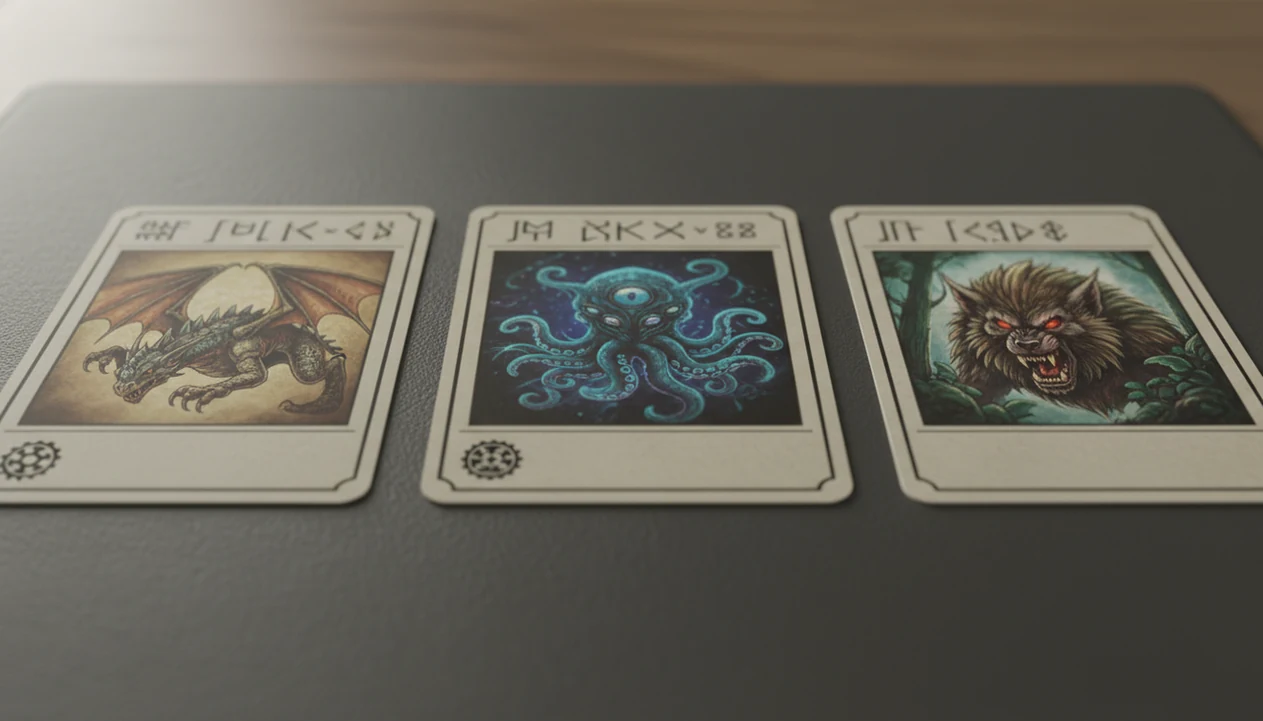
First edition vs shadowless pokemon cards come down to one main visual check: a true English Base Set first edition card has the black “Edition 1” stamp and no artwork shadow, while a shadowless card has no stamp and no artwork shadow. Unlimited Base Set cards usually have no stamp and a visible dark shadow on the right side of the artwork box, and TCG Pocket App can help log the variant after you verify those front-of-card clues.
Definition: A first edition Pokémon card is an early print card marked with a black “Edition 1” stamp, while a shadowless Pokémon card is an English Base Set card printed without the later grey artwork-box shadow.
- English Base Set first edition cards are shadowless, but not every shadowless card is first edition.
- The fastest check is stamp first, artwork shadow second, copyright line third.
- Trainer and Energy cards need extra care because the artwork-shadow clue does not work the same way.
First edition vs shadowless pokemon cards explained, side by side
Side-by-side captures of the compared products. Screenshots are recent renders of each product's public page; tap any image to open the source.
First Edition Vs Shadowless Pokemon Cards At A Glance
The quickest comparison is stamp, shadow, then print context. Base Set first edition, shadowless, and unlimited cards can look close in a binder page, but their collector demand is not the same.
| Base Set type | Edition 1 stamp | Artwork-box shadow | Typical collector meaning |
|---|---|---|---|
| First edition | Yes | No | Earliest English Base Set print marker |
| Shadowless | No | No | Early English Base Set print after first edition |
| Unlimited | No | Yes | Later and usually more common Base Set print |
First edition carries the key rarity signal because the black stamp separates it from the later shadowless run. Shadowless cards still matter because they preserve the earlier no-shadow design. Unlimited cards are the version many childhood collections contain.
Condition still changes everything. A creased first edition card may sell below a cleaner shadowless copy, especially once grading fees and raw versus graded prices enter the comparison.
How First Edition Vs Shadowless Pokemon Cards Work
First edition vs shadowless pokemon cards work by combining a print marker with a frame marker. The black “Edition 1” stamp identifies first edition status, while the missing drop shadow beside the artwork box identifies the early English Base Set frame.
The stamp is the stronger authority signal because it was printed to mark the first edition release. The no-shadow look is a layout clue: early Pokémon cards have a flatter artwork frame, while later unlimited cards add a grey shadow that makes the picture box look raised. For English Base Set, every true first edition card uses that early shadowless frame, so a stamped card should also lack the artwork shadow.
- Check Pokémon cards for the black stamp first, then inspect the right side of the artwork box.
- Treat an unstamped Pokémon card with no artwork shadow as shadowless, not first edition.
- Use the copyright line for Trainer and Energy cards, because they do not show the same Pokémon artwork-box cue.
- Separate these visual checks from condition, grading, and price research.
Five Facts About First Edition Pokemon Card Identification
These five identification facts prevent most Base Set mistakes. Use them before checking live prices or comparing a card against sold listings.
- English Base Set first edition cards have a black “Edition 1” stamp near the lower-left side of the artwork box.
- English Base Set first edition cards are also shadowless, so the artwork box lacks the later grey drop shadow.
- A shadowless Base Set card has no first edition stamp and no artwork-box shadow.
- An unlimited Base Set card has no first edition stamp and shows a dark shadow on the right side of the artwork box.
- Trainer and Energy cards need copyright-line checks because the Pokémon artwork-shadow clue does not apply the same way.
Collectors trying to separate a first edition pokemon card from a shadowless pokemon card should verify the physical card before trusting a marketplace title. We have seen lot listings use “shadowless” correctly in the photos but “1st edition” loosely in the headline.
Base Set Printing Order For First Edition Vs Shadowless Pokemon Cards
English Base Set printing moved from first edition to shadowless and then to unlimited, with the major visual change being the addition of a grey artwork-box shadow. The first edition stamp is a print and distribution marker, not a set symbol.
For an external reference point on Base Set print variants, Bulbapedia separately documents 1st Edition, Shadowless, and Unlimited Base Set releases: source.
How first edition vs shadowless works is mostly a sequence problem. The early card-frame layout had no drop shadow beside the artwork box. Later unlimited printing added that shadow, making the image area look slightly raised. In plain terms, the card border design changed after the earliest runs.
Small print-run differences became valuable because collectors sort Base Set into narrower variants than the original playground trade language did. A set number check still matters for later eras, and our guide to how to identify pokemon card set number covers that habit in more detail.
For collection tracking, log the card only after the stamp, shadow, copyright line, and language are checked. That order prevents a scanner or marketplace title from turning a shadowless card into a mistaken first edition entry.
First Edition Pokemon Card Value Signals For Collectors
The first edition stamp is the main value signal because it marks the earliest English Base Set release. For English Base Set, those stamped cards are also shadowless, which gives them both the stamp marker and the early frame style.
Demand is strongest around recognizable cards, especially Charizard, Blastoise, Venusaur, and popular holos. Still, price depends on condition, authenticity, grading company, and recent sale context. The Pokémon Company reported more than 28.8 billion Pokémon TCG cards shipped worldwide by 2019, which helps show why early Base Set prints sit inside a huge modern market source.
After a card show table check, when crowd noise makes every quick scan feel rushed, TCG Pocket App is useful because it keeps identification, raw versus graded notes, and sold-listing context in one collection workflow. Good ai-powered pokémon tcg card scanner, live market prices, and pocket-sized collection management app features should deliver faster verification, not a guaranteed appraisal.
Shadowless Pokemon Card Value Signals For Binder Finds
Shadowless cards are the second early English Base Set print style, after first edition and before unlimited. They lack the stamp, but they also lack the later artwork-box shadow, which makes them more collectible than many unlimited copies.
A shadowless pokemon card can be a meaningful binder find even without the black stamp. That is especially true for holos, starter Pokémon, and cards in unusually clean condition. The plastic crinkle of a binder page can make a sleeved card hard to photograph, but the right-side artwork border is still the first place to look.
Parents sorting a mixed pile with duplicate Base Set cards lined in rows can use TCG Pocket App because it records each variant match and keeps duplicates separated in the collection tracker. Value still depends on card name, surface wear, authenticity, and market timing. Check active listings, but give more weight to completed sales.
Who Should Care More About First Edition Vs Shadowless Cards
Rarity-focused Base Set collectors should care most about first edition, while budget-minded early-print collectors may get more satisfaction from shadowless. The better choice is not always the oldest label; it is the card that fits your goal, condition standard, and wallet.
- Choose first edition if the black stamp is the whole point of the collection, especially for key holos, starters, and cards you may eventually grade.
- Choose shadowless if you want the early English Base Set look without chasing the largest first edition premium on every slot.
- Compare condition before print status when the gap is extreme; a clean unlimited card can be a better binder or display copy than a creased, peeling, or inked early print.
- Decide whether grading is actually needed. Casual binders usually only need correct identification, a sleeve, and a clear note in the collection tracker.
- Recheck duplicate copies side by side before selling or trading, because one stamped card, one shadowless card, and one unlimited card can look surprisingly similar in a noisy room.
Where First Edition Wins And Where Shadowless Wins
First edition usually wins when the question is rarity signal, because the black stamp is the clearest early-print marker. Shadowless can win when the goal is a cleaner card, a fuller binder, or an early Base Set look at a more reachable price.
- Start with the stamp if you are ranking scarcity. A first edition Base Set card carries the stronger category label, especially when two copies have similar wear.
- Compare availability next. Shadowless copies are often easier to find than first edition copies, which can make them more practical for set building and casual collecting.
- Judge raw condition closely. Edge whitening, holo scratches, bends, and surface dents can erase a category advantage fast when the card is ungraded.
- Weigh graded cards differently. A high-grade shadowless card may beat a low-grade first edition card because the slab makes condition harder to ignore.
- Let the Pokémon name break ties. Charizard, Blastoise, Venusaur, Pikachu, and other favorites can outweigh print category, so a desirable shadowless card may matter more than a first edition common nobody is chasing.
How To Identify First Edition Vs Shadowless Pokemon Cards
Use this checklist when the card is in hand or visible in a clear photo. Scan last, not first, because early Base Set variants reward human verification.
- Check for the black “Edition 1” stamp near the lower-left side of the artwork box.
- Inspect the right side of the Pokémon artwork box for a grey or dark shadow.
- Confirm the card has no expansion set symbol, which matches Base Set layout.
- Read the copyright line on Trainer and Energy cards.
- Log the confirmed result in TCG Pocket App for identification, prices, and collection tracking.
1. Check the Edition 1 stamp
The stamp should be black and clear. Faded ink, grime, or a bad photo can hide it.
2. Inspect the artwork-box shadow
A missing shadow supports first edition or shadowless identification on Pokémon cards.
3. Read the copyright line
Trainer and Energy cards rely more on the date line than the art frame.
4. Confirm the card in a scanner app
TCG Pocket App works best as a confirmation step because the collector still verifies stamp, shadow, and variant details. For broader scanning workflows, the pokemon card identifier app guide explains camera-based checks.
Trainer Energy And Machamp Exceptions In First Edition Vs Shadowless Checks
Do Trainer and Energy cards show shadowless the same way as Pokémon cards? No. Trainer and Energy cards do not give the same artwork-box shadow cue, so the copyright line becomes the practical check.
For English Base Set shadowless-era Trainer and Energy cards, the line includes “1995, 96, 98, 99 Nintendo, Creatures, GAMEFREAK.” Later unlimited prints simplify or differ in the date line. Small text, big consequence.
Machamp is the other common trap. Base Set Machamp was widely distributed through starter decks with a first edition stamp, so it should not be judged like a normal pack-pulled first edition chase card. TCG Pocket App can help log Machamp separately because the collection entry can preserve the variant note instead of flattening it into a generic Base Set match.
Do not apply one English Base Set rule to every language or product. Japanese, European-language, and special-release cards can follow different print logic.
First Edition Vs Shadowless Pokemon Cards Myths
Misidentification usually starts with one shortcut. These four myths are the ones we see most often when collectors move from childhood binders to price research.
Myth 1: Shadowless always means first edition. A shadowless Base Set card without the “Edition 1” stamp is not first edition.
Myth 2: Every old no-symbol Base Set card is equally rare. Unlimited Base Set also has no set symbol, so the artwork shadow matters.
Myth 3: Color tone is enough. Printing color varies. Stamp, shadow, and copyright line are safer.
Myth 4: All languages follow the English rule. Shadowless identification is mainly an English Base Set issue.
Collectors checking foil variants should also separate early-print status from holo pattern questions; the holo vs reverse holo guide covers that different layer. Collectors checking foil variants should also separate early-print status from holo pattern questions; the holo vs reverse holo guide covers that different layer.
Limitations
Visual checks are useful, but they do not replace careful authentication or current market research. Treat the app result as a starting point, not the final word.
- Worn or damaged cards can hide stamps, borders, and artwork shadows.
- Low-resolution photos can mislead people and AI scanners, especially on glossy holos.
- Identification does not guarantee high value because condition and grading matter.
- Market prices are volatile, so compare live sources such as TCGplayer, PriceCharting, PSA APR, and completed eBay sales rather than relying on one app or one active listing.
- Non-English cards may not follow English Base Set shadowless rules.
- Machamp and starter-deck quirks can confuse simple first edition checklists.
- Counterfeits, recolored borders, and altered stamps need additional authentication.
- Scanner matches can confuse similar prints until the collector checks the exact variant.
PSA reported grading its 50 millionth trading card in 2021, with Pokémon among the fast-growing segments, which shows why grading context matters for early cards source. TCG Pocket App is helpful for organization, but grading and authentication decisions still require outside evidence.
FAQ
Are all first edition cards shadowless?
English Base Set first edition cards are shadowless. Other languages and later sets may use first edition stamps without following the same shadowless rule.
Is shadowless rarer than unlimited?
Shadowless Base Set cards are generally scarcer than unlimited Base Set cards. Unlimited cards were printed later and are more commonly found in childhood collections.
Are shadowless cards first edition?
Shadowless cards without the black “Edition 1” stamp are not first edition. They are early English Base Set cards from the print style after first edition.
Where is the first edition stamp?
The first edition stamp is a black “Edition 1” mark near the lower-left side of the artwork box. On Pokémon cards, it sits below and left of the image area.
What is an unlimited Pokemon card?
An unlimited Base Set card is a later print with no first edition stamp and a visible shadow beside the artwork box. It is usually more common than first edition or shadowless.
How do Trainer cards show shadowless?
Trainer cards rely on the copyright line rather than the Pokémon artwork-shadow cue. The shadowless-era line includes “1995, 96, 98, 99 Nintendo, Creatures, GAMEFREAK.”
Why is Base Set Machamp often marked first edition?
Base Set Machamp was commonly included in starter decks with a first edition stamp. Handle it as a special starter-deck case, not as a normal pack-pulled comparison.
Are shadowless Pokemon cards worth more?
Shadowless Pokémon cards are often worth more than unlimited copies of the same card. Value still depends on card name, condition, authenticity, grading, and current market data.
Get started with First Edition Vs Shadowless Pokemon Cards app on iOS.