
Benefits Of Pokémon Card Variant Checking Before Pricing
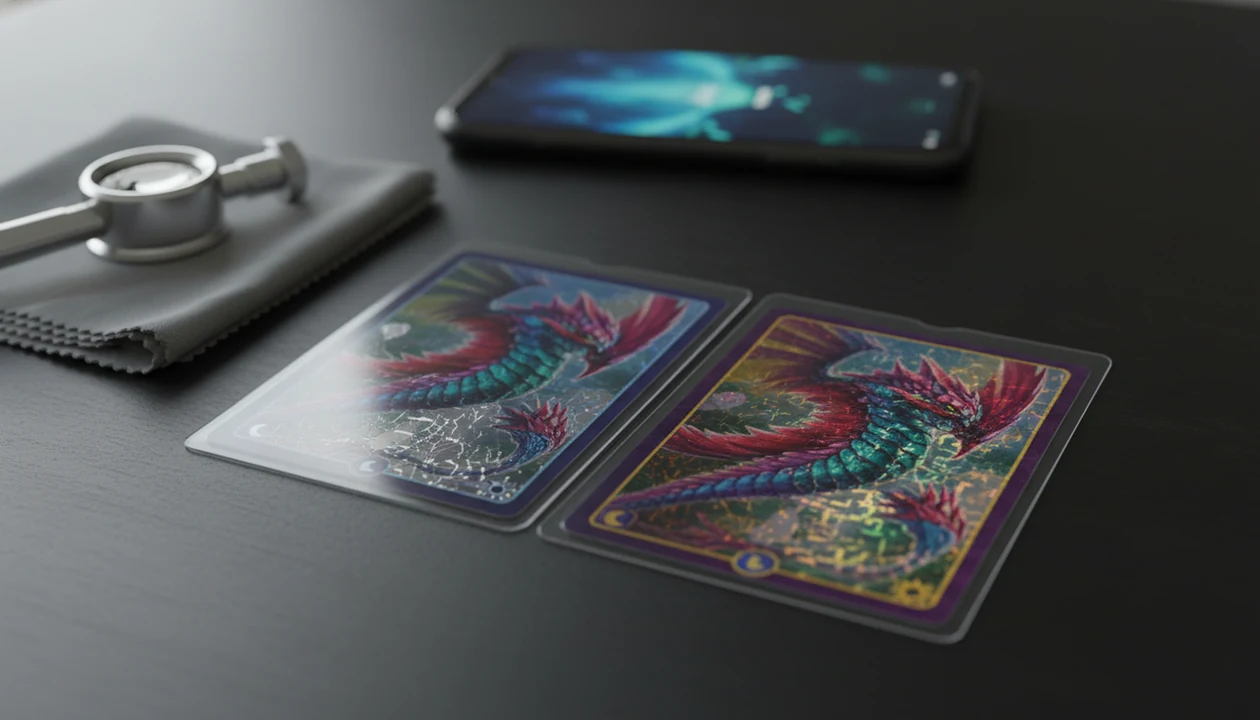
The main benefits of pokemon card variant checking are better price accuracy, fewer trade mistakes, and cleaner collection records because the app confirms the exact version of the card before you trust a value. AI scanning can identify a likely card quickly, but variant review confirms the set, number, foil type, language, stamp, and other value-changing details.
> Definition: Pokémon card variant checking is the process of confirming the exact printed version of a scanned card before using its market price.
- AI card identification is the starting point, not the final price check.
- Set number, rarity symbol, holo pattern, language, promo stamps, and condition can change a Pokémon card’s value dramatically.
- TCG Pocket App is a pokemon card scanner app that identifies cards, checks market prices, and tracks collections for Pokémon TCG collectors.
Pokémon Card Variant Checking Definition For Price Accuracy
Pokémon card variant checking means confirming the exact version of a card after a scan, before accepting the displayed price. It sits between fast AI identification and real pokemon card price accuracy.
Two cards can share the same Pokémon name and artwork but differ by set, collector number, foil treatment, promo stamp, rarity, or language. That difference can point to a separate market listing. A scan that says “Pikachu” is useful, but the lower-left set number decides whether the price belongs to your card.
The practical workflow is simple: scan, verify, then price. A scanner or collection app can speed up the first match, but it is not an official Pokémon product and cannot replace checking the printed card details yourself.
The small print matters.
Five Variant Checking Benefits Collectors Should Know
The main variant checking benefits are fewer mismatches, cleaner pricing, safer trades, better records, and a first screen for suspicious cards. Treat the app result as a starting point, not the final word.
- Prevents same-name mix-ups: Variant checking separates cards that share a name or artwork but belong to different sets or print runs.
- Improves live market price matching: A confirmed set number, foil type, and language make the price-source match more reliable.
- Reduces trade mistakes: Exact variant review lowers the chance of overpaying for a common print or under-selling a scarcer one.
- Keeps binders cleaner: Collection records work better when each slot stores the real variant, not just the Pokémon name.
- Adds a suspicion check: Stamps, borders, language, texture, and print details can reveal altered or counterfeit-looking cards.
In a 2022 FTC consumer survey, 15% of respondents reported losing money to fraud in the previous year, including online shopping and collectible-related losses source.
How Pokémon Card Variant Checking Works After AI Scanning
Pokémon card variant checking works by narrowing an AI scan from a likely card identity to a confirmed market record. The scanner proposes matches from image features, card text, layout, and artwork; the collector then confirms the details that change value.
In technical terms, the scan may compare image embeddings, which are mathematical summaries of the photo, against known card images. In plain English, the app is asking, “Which known card does this picture resemble?” Variant checking asks the follow-up question: “Which exact print is it?”
The confirmation step uses set symbol, collector number, rarity, language, holo pattern, and stamps. Ring-light glare bouncing off a reverse holo through a nine-pocket binder page can make that harder than it sounds. Sleeve reflections and poor lighting can push the first match toward the wrong candidate.
A good AI-powered Pokémon TCG card scanner with live market prices and collection management can make the scan, verify, log, and compare workflow faster. It still should not be treated as a guaranteed appraisal or counterfeit-authentication tool.
How To Use Variant Checking Before Trusting A Pokémon Card Price
Use variant checking after scanning and before pricing, trading, or logging the card. The most reliable workflow is to confirm printed identifiers first, then review condition and market context.
- Scan the card in clear light so the name, artwork, borders, and lower text are readable.
- Confirm the set symbol and collector number before trusting the suggested match.
- Check rarity, holo type, reverse holo, promo stamps, special stamps, and language against the physical card.
- Review condition separately by looking for whitening, dents, scratches, creases, and surface wear.
- Accept the live market price only after the exact variant is confirmed and the condition caveat is added.
For most collectors, variant checking before pricing is easier than fixing records later because one wrong set match can spread into trades, binder totals, and exported inventory.
Before You Start Variant Checking
Before you start variant checking, set up the card so the small identifiers are easy to see and the price result is not accepted too quickly. A few minutes of prep prevents glare, rushed matches, and suspicious cards from being mixed into normal inventory.
- Use bright, indirect light so the card face is clear without a white streak running across foil, texture, or the lower text line.
- Remove the card from binder pages when plastic reflections cover the set symbol, collector number, rarity mark, or stamp. A sleeve is fine if it stays readable, but the binder sheet often causes the worst glare.
- Locate the printed identifiers before scanning or confirming a result. Know where the set symbol, collector number, rarity symbol, language text, and stamp usually sit on that card era.
- Keep recent market sources ready so a displayed value can be compared against current listings or sold-price context before you rely on it.
- Set aside odd-looking cards for slower inspection if the texture, border, stamp, weight, color, or print quality feels off. Those cards may need careful physical review or professional grading before pricing.
Step 1: Scan The Pokémon Card Before Variant Review
Start with a clean scan because AI recognition depends heavily on the photo it receives. A centered, readable image gives the scanner a stronger first match before you move into variant review.
Remove glare when possible, especially on holo and reverse holo cards. If the card is in a sleeve, tilt it slightly or move the light source. The plastic crinkle of a binder page can throw reflections across the name bar, and that tiny flare sometimes hides the rarity symbol.
AI recognition is useful for speed, but the first result should be treated as a suggested match. Damaged corners, low light, cropped photos, and partial images can all produce wrong variant candidates. For a wider identification workflow, a pokemon card identifier app guide can help explain where scanning ends and verification begins.
Step 2: Match Set Symbols And Collector Numbers For Price Accuracy
Does the set symbol and collector number matter more than the Pokémon name? Yes. Set symbol and collector number are usually the primary printed identifiers for exact Pokémon card variant matching.
Reprints can reuse names, artwork, attacks, and even very similar layouts. They still belong to different sets and often different market listings. The lower-left or lower-right collector number is the quick anchor, and the rarity symbol helps confirm the row you are choosing.
We check the set number before trusting a price match, especially when a scan confuses two similar Pikachu prints until the set symbol clears it up. A wrong set match can attach the card to the wrong price history, which makes active listings, sold-listing context, and collection totals less useful. The full printed-number process is covered in how to identify pokemon card set number.
Step 3: Confirm Holo Patterns, Promo Stamps, And Language Variants
Holo pattern, stamp status, and language are pricing signals because they can create separate market records for the same card. A regular holo has foil in the artwork area, a reverse holo has foil outside the main artwork, and a non-holo lacks that foil treatment.
Promo stamps and special stamps mark cards tied to releases, events, products, or campaigns. Language also matters because English, Japanese, and other international prints may trade in different markets. If you collect across regions, the question of what app identifies Japanese pokemon cards becomes part of the same variant workflow.
Parallel foils and promos are common areas for both AI and human misreads. A print line crossing a shiny border can make a reverse holo look different in a quick scan. According to a 2021 CPSC e-commerce report, about 47% of surveyed consumers expressed concern about counterfeit or unsafe products when shopping online, which is broader context for checking authenticity-related details source.
Step 4: Separate Variant Checking From Pokémon Card Condition
Variant checking answers which card it is; condition answers what shape that card is in. Both are required for realistic pricing, but they should not be stored as the same field.
| Pricing field | What it answers | Examples | Why it matters |
|---|---|---|---|
| Variant | Which printed version is this? | Set number, holo, language, stamp | Connects the card to the correct market record |
| Raw condition | How worn is the card? | Near Mint, Lightly Played, Moderately Played, damaged | Adjusts the likely value within that variant |
| Graded condition | Has a grading company assigned a grade? | PSA 9, BGS 8.5, CGC 10 | Creates a separate raw versus graded comparison |
| Binder record | What should the collection log remember? | Variant plus condition caveat | Prevents one clean copy and one worn copy from blending together |
A correct variant can still produce a misleading price if a creased back under fingertip is ignored. Variant first. Condition next.
Step 5: Verify Market Listings Before Trades And Sales
Live prices are only useful when they attach to the exact confirmed variant. Otherwise, a trade offer, sale listing, or collection total may be built on the wrong card record.
For trades, exact matching helps both sides compare the same item. For sales, it improves liquidity because buyers can line up your listing against the correct sold-listing context. The green sold-price filter on eBay is not the same as active asking prices, and that difference matters when a seller is pointing at a gem mint label.
Per the U.S. Bureau of Economic Analysis, recreational goods and vehicles, a category that includes games and collectibles, accounted for about 2.1% of U.S. personal consumption expenditures in 2023 source. That does not make cards investments. It does show why accurate pricing habits matter in a market where many people buy, trade, and sell.
Common Pokémon Card Variant Checking Mistakes That Hurt Price Accuracy
Most Pokémon card price accuracy problems start with a small unchecked assumption. These are the mistakes we see most often when collectors move too quickly from scan to value.
- First-match trust: Accepting the first AI result without checking the set symbol, collector number, or rarity.
- Same-art assumption: Treating identical artwork as identical value, even when the card is a reprint or parallel.
- Foil and stamp skipping: Ignoring reverse holo, promo stamp, special stamp, language, or set number details.
- Authentication confusion: Treating scanner output as proof that a card is genuine.
- Bulk neglect: Checking only rare cards while common and uncommon variants get logged incorrectly.
Guided prompts can reduce some errors, but users still need to confirm visible details. A duplicate card lined in rows can look boring until one copy has the wrong rarity symbol logged. For symbol basics, pokemon card rarity symbols are worth learning early.
Limitations
Variant checking improves pricing discipline, but it cannot solve every valuation or authenticity problem. Use it as a verification layer, not a guarantee.
- Condition grading remains subjective, even after the correct variant is selected.
- Poor lighting, glare, sleeves, or blurry photos can still cause wrong scan matches.
- High-quality counterfeits or altered cards may require physical inspection or professional grading.
- Live market prices can change after a variant is correctly verified.
- Some niche promos, regional prints, tournament promos, or new releases may be missing from app databases.
- Variant checking does not guarantee a buyer, sale, trade outcome, or final negotiated price.
- Raw versus graded prices should not be blended without checking the grading company and grade.
- Scanner databases may lag behind newly released products or obscure international cards.
- A binder-friendly scan can miss surface scratches that appear only under angled light.
- Price-source transparency still matters because TCGPlayer, CardMarket, PriceCharting, and recent eBay sales may reflect different buyer pools.
If a card looks unusually expensive, unusually cheap, or physically odd, slow down.
FAQ
What is Pokémon card variant checking?
Pokémon card variant checking is confirming the exact printed version of a Pokémon card after scanning. It usually includes set number, rarity, foil type, stamp, language, and other variant details.
Why should I check variants before pricing a Pokémon card?
You should check variants before pricing because similar-looking Pokémon cards can have very different market records. The correct price depends on the exact variant, not just the Pokémon name.
Can AI scanners misidentify Pokémon card variants?
Yes, AI scanners can misidentify variants when cards look alike, photos are incomplete, or glare covers key details. Scanning should be followed by visible-detail confirmation.
Which Pokémon card details affect value?
Set number, rarity symbol, holo type, language, promo stamps, condition, and authenticity signals can affect value. These details should be checked before trusting a displayed price.
Do common Pokémon cards need variant checking?
Yes, common Pokémon cards can still have variants that affect inventory records and price accuracy. Variant checking is useful for bulk sorting, set completion, and duplicate tracking.
Is card condition part of variant checking?
Condition is separate from variant checking. Variant checking identifies the exact card, while condition review estimates the physical state before pricing.
Can variant checking detect fake Pokémon cards?
Variant checking can flag suspicious mismatches in stamps, layout, language, or set details. It cannot guarantee authentication, and questionable cards may need expert inspection or grading.