How To Scan Pokémon Cards On iPhone Clearly
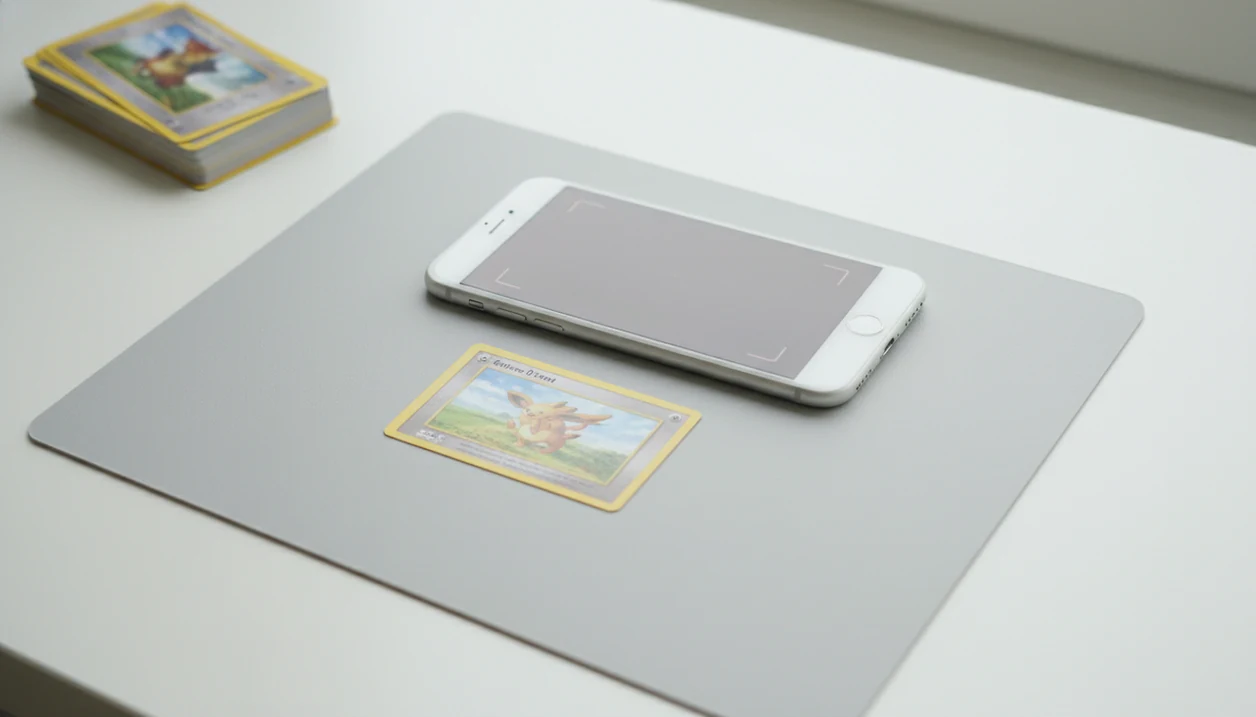
To learn how to scan pokemon cards on iphone, use a dedicated Pokémon card scanner app, give it camera permission, place the card flat on a plain background, and hold the iPhone steady until the app identifies the card. Good lighting, low glare, and a centered card matter more than using the newest iPhone.
A dedicated Pokémon card scanner app can identify cards, check market prices, and track collections for Pokémon TCG collectors.
- Use an iPhone Pokémon card scanner app, not the default Apple Camera app, for card identification and collection tracking.
- Turn on camera permission, scan on a plain bright surface, and keep the card flat, centered, and glare-free.
- Physical card scanning is different from Pokémon TCG Live code card redemption.
What Scanning Pokémon Cards On iPhone Means
Scanning Pokémon cards on iPhone means using an app’s camera to identify a physical Pokémon TCG card, then optionally saving it to a collection or checking a value estimate. The Apple Camera app can take a photo, but it does not reliably identify the set, variant, collector number, or market value by itself.
A real scanner workflow compares the card image against a card database. It looks at artwork, text, borders, set symbols, and numbers. Code card redemption in Pokémon TCG Live is separate; that workflow scans or enters a code from a code card to redeem digital content.
Different task. Different result.
For collectors comparing phone workflows across devices, our broader how to scan pokemon cards with phone guide covers the same basics outside iOS.
Five iPhone Pokémon Card Scanner Facts Before You Start
- Camera permission must be enabled in iPhone Settings, or an iPhone Pokémon card scanner cannot open the live camera view.
- A clean, bright, low-shadow surface helps the app separate the card from the background.
- The card should be centered, flat, and held still long enough for focus to settle.
- Apps vary. Some identify cards and show prices, while others focus on cataloging, exports, or set checklists.
- Physical card scanning is not the same as scanning a Pokémon TCG Live code card.
A plain desk mat usually beats a patterned playmat. Energy cards scattered across a desk can confuse the frame edges, especially when the scanner is trying to detect one rectangle.
For binder work, the same facts apply, but glare and pocket seams matter more. The best pokemon card scanner for binders guide focuses on that setup.
How Pokémon Card Scanning Works On iPhone
Pokémon card scanning on iPhone works by capturing a camera image, cleaning up the frame, matching visual details, and checking the likely match against a card database. The technical pieces often include image detection and visual matching. In plain English, the app is trying to answer, “Which known card does this photo most resemble?”
Borders, artwork, card name, set symbol, and collector number all help. The lower-left set number check is still worth doing before trusting a price match, especially when two similar Pikachu prints look close on screen. Pricing, when offered, is a separate market-data layer after identification.
A dedicated scanner can speed up the scan, verify, log, and compare routine, but no scanner should be treated as perfect recognition. A good ai-powered pokémon tcg card scanner, live market prices, and pocket-sized collection management app deliver faster identification and organized context, not a guaranteed grade or sale price.
How To Use An iPhone Pokémon Card Scanner Clearly
Use an iPhone Pokémon card scanner by setting up the card first, then checking the app’s result before saving anything. For most collectors, the scanner is fastest when the card is already flat and the phone is steady.
- Open the scanner app and allow camera access when iOS asks.
- Place the card on a plain white, gray, or black background under bright indirect light.
- Hold the iPhone steady about 5 to 6 inches above the card as a starting distance.
- Center the full card in the frame, with all four borders visible.
- Wait for recognition, then review the card name, set, variant, and value estimate.
- Save the card only after checking the match against the physical card.
For binder pages, the plastic crinkle can shift the card just enough to blur text. If that happens, flatten the page gently and rescan. Our how to scan pokemon cards through binder sleeve walkthrough covers sleeve-specific fixes.
Best iPhone Setup To Scan Pokémon Cards iOS Style
What is the best iPhone setup to scan Pokémon cards iOS style? Use a matte white, gray, or black background, bright indirect light, and a phone angle that keeps the card borders rectangular.
Avoid busy patterns because the scanner needs a clean edge around the card. Harsh overhead light is worse on holo cards; ring-light glare bouncing off a reverse holo through a nine-pocket binder page can make the artwork look washed out. Shift the light to the side before blaming the app.
Keep the iPhone parallel to the card. Clean the lens with a soft cloth, avoid digital zoom when possible, and remove sleeves or top loaders only when it is safe and necessary. For valuable cards, leave protection on and accept a slower scan.
For iPhone users, a parallel phone angle is often easier than cropping later because scanner apps rely on the full card outline.
Camera Permission Fixes For iPhone Pokémon Card Scanner Apps
Why will my iPhone Pokémon card scanner app not open the camera? The usual iOS-specific issue is that camera permission is turned off for that app.
Open Settings, scroll to the scanner app name, and turn the Camera toggle on. Then close and reopen the app. If the scanner still shows a black screen, update the app and iOS, then test again under good light with the card in focus.
Don’t reinstall first. It wastes time.
Only reinstall after checking permission, lighting, focus, and app updates. The Pokémon community forum gives the same basic direction for camera access problems: turn on camera permission in iPhone settings before trying to scan. That advice applies whether the scan is for a code card or a physical-card scanner.
Physical Card Scanning Versus Pokémon TCG Live Code Scanning
Physical Pokémon card scanning identifies a real collectible card for inventory, set tracking, or value research. Pokémon TCG Live code scanning redeems digital content from a code card, and it does not build a physical card collection record.
For the code-card workflow, cite the official Pokémon support guidance on redeeming Pokémon TCG Live codes: https://support.pokemon.com/hc/en-us/categories/360000094053-Pok%C3%A9mon-TCG-Live. For iPhone camera access, cite Apple’s app-permission controls: https://support.apple.com/guide/iphone/control-access-to-hardware-features-iph168c4bbd5/ios.
| Workflow | What you scan | Main purpose | Result |
|---|---|---|---|
| Physical card scanning | The actual Pokémon TCG card | Identify, log, and compare value | Collection entry or price estimate |
| Pokémon TCG Live code scanning | QR code or printed code card | Redeem digital content | In-game reward or pack redemption |
| Manual entry | Card name, set number, or code typed in | Backup when scanning fails | Search result or redemption attempt |
One workflow does not replace the other. A physical Charizard scan will not redeem a digital pack, and a code card scan will not tell you whether your physical card is near mint.
Scan Result Checks For Pokémon Card Value On iPhone
A scan result is a starting point, not a professional grade, appraisal, or guaranteed sale price. Before you trust a value estimate, check the card name, set symbol, collector number, language, rarity, and holo or reverse holo variant.
Market price depends on condition, variant, sales source, and update timing. The green sold-price filter on eBay tells a different story than active asking prices, especially when a raw holo is compared to a slabbed card weighed in your palm at a show table. Raw versus graded is not a small detail.
A card-scanning app is useful for quick value checks and collection tracking when you still verify the match yourself. For deeper price research, the best app for pokemon card prices guide explains why sold-listing context matters more than a single displayed number.
Evidence Sources For Scanning And Price Checks
Use official support pages for the setup rules, then use marketplace data to sanity-check the price. Scanner apps are helpful shortcuts, but their prices are estimates, not appraisals, grades, or proof that a card will sell for that number.
- Check Apple’s iPhone camera-permission guidance when a scanner shows a black screen or cannot open the live view; the fix usually starts in Settings, not inside the card.
- Compare Pokémon’s TCG Live support notes before scanning code cards, because redeeming a digital code is a different workflow from identifying a physical card.
- Verify market value with eBay sold listings rather than active asking prices, especially when condition, language, grading, or holo treatment changes the comparison.
- Cross-check the scan result in another price or collection tool if the number looks odd; TCGplayer and Collectr are common references collectors use for cataloging and price checks.
- Treat the final number as a research range until you inspect the card’s surface, corners, centering, and exact print.
That extra minute catches many bad matches.
Limitations
iPhone Pokémon card scanning apps are fast, but they cannot remove every collector judgment call. Treat the app result as a starting point, not the final word.
- Blurry, dark, cropped, sleeved, or glared images can fail or point to the wrong card.
- Rare variants, promos, foreign-language cards, and damaged cards may need manual correction.
- Scanning does not grade condition, authenticate a card, or detect every surface issue.
- Price estimates may not reflect real-time sold prices or exact condition-specific value.
- Different apps use different databases, export tools, and pricing sources.
- Pokémon TCG Live code scanning applies to code cards, not physical card inventory.
- Surface scratches across holo foil can affect value even when the scan match is correct.
Price-source transparency matters because a scanner may show a useful estimate without showing enough sold-listing context. If you need insurance, resale, or grading decisions, compare multiple sources and inspect the card outside the app.
FAQ
Can an iPhone scan Pokémon cards?
Yes. An iPhone can scan Pokémon cards through a dedicated scanner app, but the default Apple Camera app alone does not identify set, variant, and value.
What app should I use to scan Pokémon cards on iPhone?
Use an app that identifies the card, shows the set and variant, supports value checks, and lets you save or export a collection. Apps such as TCG Pocket App, TCGplayer, and Collectr focus on different parts of that workflow.
Can I scan Pokémon cards for free on iPhone?
Some iPhone scanner apps offer free scanning. Advanced pricing, exports, bulk tools, or collection features may vary by app.
Why will my Pokémon card scanner app not open the camera?
Check iPhone camera permission under Settings, then the app name, then Camera. Reopen the app and install updates before reinstalling.
How do I avoid glare when scanning holo Pokémon cards?
Use bright indirect light, tilt the light source away from the card, and keep the iPhone parallel to the surface. Remove sleeves only when it is safe to handle the card.
Can an iPhone scan show my Pokémon card value?
Yes, some iPhone scanner apps show estimated market value after identifying the card. Condition, variant, language, and sold-listing context still need review.
How accurate are Pokémon card scanner apps on iPhone?
Accuracy depends on lighting, focus, card position, image clarity, and the app database. Similar prints can still require a manual set number check.
Is scanning a Pokémon TCG Live code card the same as scanning a physical card?
No. Pokémon TCG Live code card scanning redeems digital content, while physical card scanning identifies and logs a real card.